
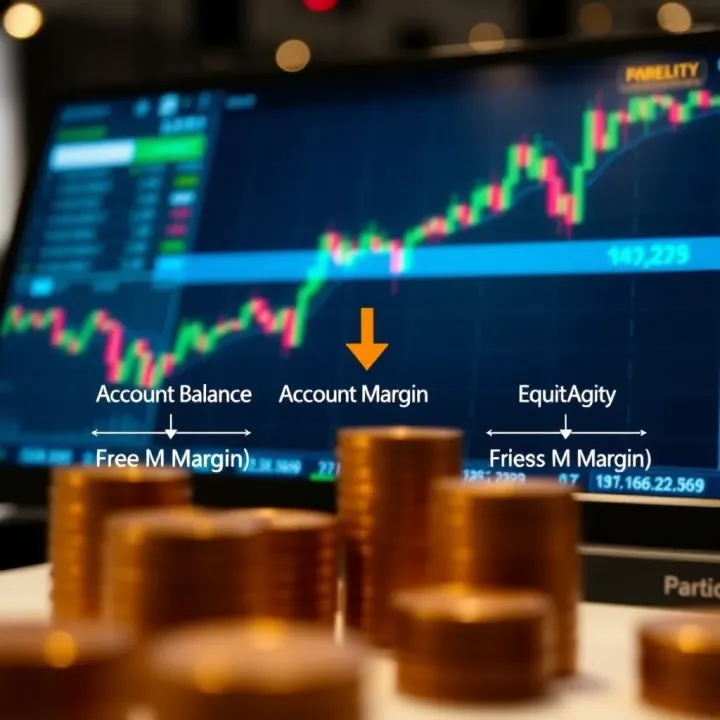
Understanding Free Margin in Forex Trading
📊 Learn how free margin in forex affects your account balance, equity, and risk. Calculate it right to trade smart and protect your KSh investments effectively.
Edited By
James Thornton
Free margin is a key concept every forex trader should understand before diving deeper into the market. Simply put, free margin refers to the amount of money in your trading account that is available to open new positions or withstand potential losses on existing trades. It acts as a financial cushion that guards your account against margin calls or forced liquidation.
In forex trading, your account balance is split into several components: equity, used margin, and free margin. Equity is the total value of your account, including unrealised profits or losses from open trades. Used margin is the amount locked to maintain your current positions, often determined by the leverage you use. Free margin is what remains after subtracting used margin from equity:
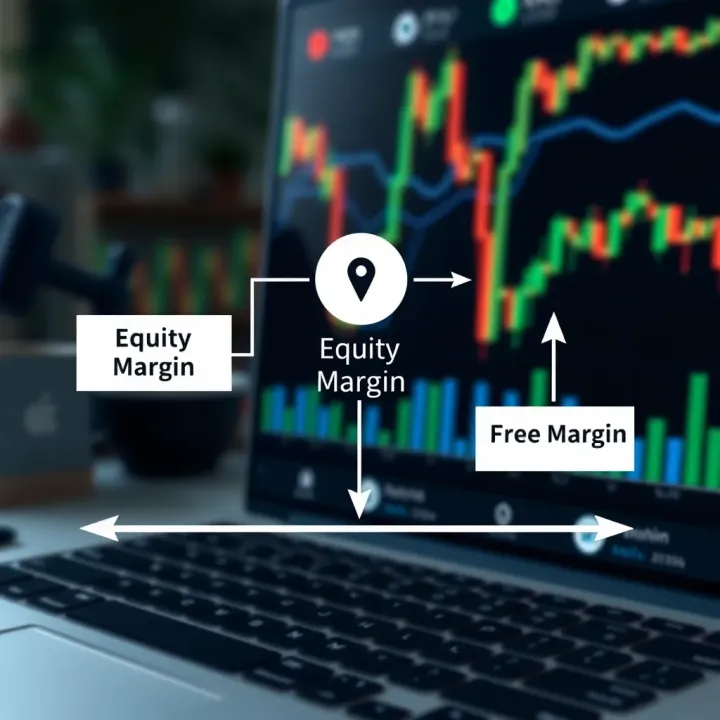
Free Margin = Equity – Used Margin
For instance, suppose you start with KS00,000 in your account and use KS0,000 as margin for an open trade. If that trade is currently profitable and your equity rises to KS10,000, your free margin becomes KSh90,000. This free margin can be used to take on other trades or absorb losses.
Understanding how free margin works helps you manage risk better. When your free margin drops close to zero, it means your account lacks enough buffer to sustain further losses, increasing chances of a margin call by your broker. That can force closure of your trades at unfavourable prices, locking in losses.
Kenyan traders often use leverage to increase potential returns, but this magnifies risks. For example, using leverage of 1:100 lets you control KS million with just KS0,000. While this boosts your ability to trade bigger lots, it quickly eats into your free margin if the market moves against you.
Being aware of your free margin allows you to:
Decide how much more to trade without overextending
Monitor your account health regularly
Avoid sudden forced closures by brokers
Always keep an eye on your free margin through your trading platform. Setting alerts can help you react before your free margin gets dangerously low.
Managing free margin well aligns with disciplined trading, which is essential for long-term success on Kenyan and global forex markets. It’s not just about having funds, but knowing when and how to deploy them effectively.
Understanding free margin is vital for managing your forex trading account effectively. Free margin tells you how much money remains available after accounting for the funds tied up in open positions, showing your real buying power. It helps determine whether you can open new trades or withstand price swings without triggering a margin call.
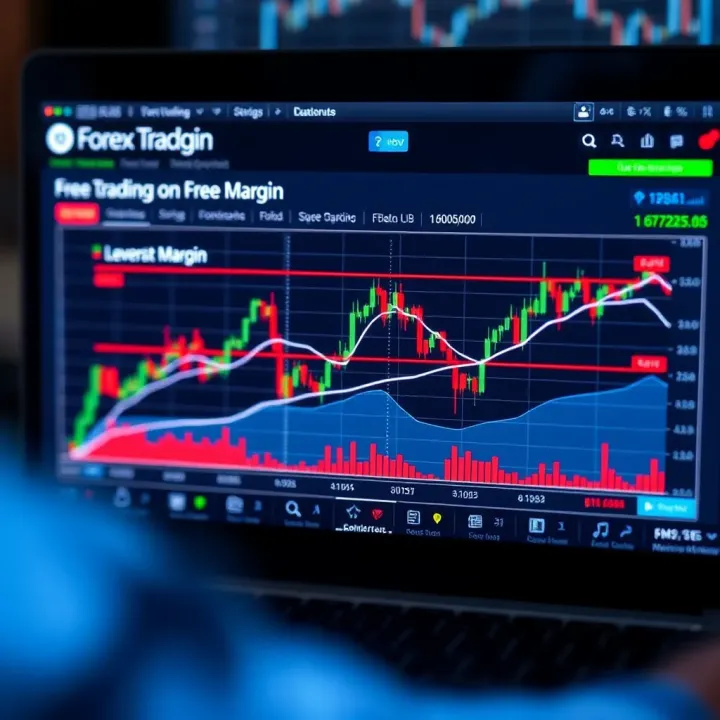
Free margin is the unused portion of your trading funds that can support additional positions or absorb losses. For example, if you have KS00,000 in your account and currently have KS0,000 tied up in positions (used margin), your free margin is KSh70,000. This means you still have KSh70,000 available to trade or to cushion your account against losing movements.
It's important to watch free margin closely, as a shrinking free margin limits your ability to open new trades and increases the risk of forced position closure if the market moves against you. Free margin fluctuates with your account equity, which changes as open positions gain or lose value.
These three terms are linked but represent distinct parts of your trading account:
Equity is your total account value, including your initial balance and any unrealised profits or losses from open trades.
Used Margin is the portion of your funds currently committed to maintaining open positions. It's locked and can't be used for other trades.
Free Margin is the balance leftover after subtracting used margin from your equity. It shows what you can still use.
For instance, say your account balance is KS50,000. You open a position requiring KS0,000 margin, so your used margin is KS0,000. If that position gains KS,000 unrealised profit, the equity becomes KS55,000 (150,000 + 5,000). The free margin would then be KS35,000 (equity minus used margin: 155,000 - 20,000).
This breakdown matters because it reveals the real liquidity of your account. A high free margin indicates a healthier cushion, allowing more flexibility in trading and risk management. Conversely, low or zero free margin signals that your account is fully stretched, increasing the chance of margin calls.
Keep a close eye on your free margin. It acts like your safety net, showing how much room you have before your broker may start closing positions automatically.
By mastering these definitions, Kenyan traders can better navigate the forex market, making informed decisions about position sizing and risk exposure based on the actual funds at their disposal.
Free margin plays a key role in deciding how much you can trade at any given time. It’s basically the buffer between your account equity and the margin you’ve locked down on your current open positions. Without enough free margin, you can’t open new trades or keep your existing ones open safely.
Think of free margin as your account’s ready cash for placing bets on currency pairs. When you want to open a new position, the broker checks if your free margin can cover the required margin for that trade. If you’ve got KSh 50,000 equity and already used KSh 30,000 as margin for an open trade, your free margin is KSh 20,000. If the next trade needs a margin of KSh 25,000, you simply can’t open it without topping up your account or closing some positions.
Free margin also matters for maintaining positions. When the market moves against you, your equity drops, which shrinks your free margin. If free margin falls to zero or below, the broker may close positions automatically to prevent further loss, known as a margin call or stop-out. This means keeping an eye on free margin helps you anticipate whether your trades can survive rough market swings.
Free margin is not just about opening trades — it’s about sustaining your presence in the market safely.
Leverage can boost your trading capacity but it comes with a catch. Suppose you use a leverage of 1:100, meaning you can control KSh 100,000 in the market with just KSh 1,000 margin. The higher the leverage, the less of your own money it takes to open a position, so your free margin seems bigger and lets you take more trades.
However, leverage also magnifies losses. While your free margin might allow opening several trades, adverse price moves can quickly eat into your equity, forcing your free margin down and triggering margin calls faster than you expect. For example, a 1% price move against a highly leveraged trade can wipe out a big chunk of your free margin.
In practice, it's wise to use leverage cautiously. Many successful traders keep a healthy free margin cushion to avoid forced liquidations. In Kenya, with volatility in currency pairs like USD/KES, monitoring how leverage impacts your free margin can protect you from sudden account wipeouts.
In summary, free margin sets the limit for how many trades you can comfortably manage. It governs your entry into new markets and safeguards your current positions by absorbing losses until your equity shrinks dangerously low. Combine an understanding of free margin with sensible leverage choices, and you'll strengthen your trading capacity effectively.
Understanding how to calculate free margin in your forex account is vital for maintaining control over your trades and managing risk effectively. Free margin represents the funds available to open new positions or sustain existing trades, so knowing how much remains after accounting for current trades lets you avoid unpleasant surprises like margin calls.
Calculating free margin requires just a few pieces of key information: your account balance, your equity, and the margin used by your open positions. The formula is straightforward:
Free Margin = Equity - Margin Used
Where:

- **Account Balance** is the total money in your trading account.
- **Equity** equals your balance plus any unrealised profits or minus any unrealised losses from open positions.
- **Margin Used** is the amount of money set aside to support your open trades.

For example, if you start with a KS00,000 account balance and open a position requiring KS0,000 margin, your free margin is the equity (which is initially KS00,000) minus the margin used (KS0,000), leaving KSh80,000 to cover further trades or price fluctuations.

This calculation updates constantly as your open positions gain or lose value because it depends on equity, not just the balance.

### Sample Scenarios Demonstrating Free Margin Changes

Consider a trader with KS50,000 in their account who opens two positions each requiring KS0,000 margin, using KSh60,000 total. Initially, their equity matches their balance, so the free margin is KS50,000 minus KSh60,000, equalling KSh90,000. Now, suppose one position shows an unrealised loss of KS0,000 and the other an unrealised profit of KS,000. The equity adjusts to KS45,000 (150,000 - 10,000 + 5,000), and free margin becomes KS45,000 - KSh60,000 = KSh85,000.

If the market turns against the trader further, and unrealised losses increase to KS5,000 total, the equity drops to KS25,000. Consequently, free margin falls sharply to KSh65,000. If free margin shrinks too much, the trader risks a margin call, where the broker may close positions to avoid further losses.

> Monitoring free margin regularly helps you avoid margin calls and ensures you have enough buffer to absorb market swings.

By practising these calculations with your current balances and open positions, you can keep an eye on your financial breathing room. This simple yet powerful understanding is essential for making informed decisions and managing your forex trading account responsibly.

## Managing Risk Using Free Margin

Managing risk effectively is a key part of successful forex trading, and understanding your free margin is central to this. Free margin is essentially the money you have available to open new trades or withstand losses on existing positions without getting a margin call. For traders in Kenya, especially those using brokers that offer leverage, keeping an eye on free margin can help avoid costly liquidation of positions.

### Avoiding Margin Calls and Stop-Outs

A margin call happens when your free margin drops to zero or below, meaning you’ve used up all your available funds to maintain your open trades. At this stage, the broker may ask you to add more funds or automatically close some positions to prevent further losses. Stop-out refers to when the broker forcibly closes your least profitable trades because your account no longer meets the margin requirements.

For example, if you start with a KSh 100,000 account balance and open a leveraged trade that uses KSh 80,000 as margin, your free margin is KSh 20,000. If the trade starts running at a loss and your equity falls to KSh 90,000, your free margin decreases accordingly. Neglecting this can cause the broker to close your trade suddenly to protect against further loss.

Avoiding margin calls means regularly checking that free margin is healthy enough to sustain your positions during market swings. Keep some buffer rather than using all your free margin at once. This way, even if the market moves against you temporarily, your account is less likely to hit stop-out levels.

### Best Practices for Monitoring Your Free Margin

Monitoring your free margin should be part of your daily trading routine. Tools like your trading platform’s margin indicators help track this in real-time. Here are some key practices:

- **Set alerts:** Many trading platforms allow you to set alerts when free margin falls below a certain threshold. This helps you act before receiving a margin call.

- **Use conservative leverage:** Higher leverage means smaller free margin. Choosing moderate leverage keeps more free margin available, preventing surprise closures.

- **Regularly review open positions:** Large or multiple open trades eat into your free margin quickly. Closing underperforming positions can free margin and reduce risk.

- **Keep an emergency fund:** Reserving funds outside active margin helps manage unexpected losses without panicking.

- **Use stop-loss orders:** These automatically close trades at predefined levels to prevent bigger losses that would deplete free margin abruptly.

> Keeping a close eye on free margin is like monitoring your car’s fuel gauge on a long trip. Without enough fuel, you risk breaking down mid-journey — in trading terms, a margin call or stop-out. Plan ahead, keep your buffer, and you’ll drive safely through volatile markets.

By managing your free margin wisely, you avoid sudden surprises that can wipe out your capital. With proper attention, it becomes easier to trade confidently and keep control, even when markets move fast and unpredictably.📊 Learn how free margin in forex affects your account balance, equity, and risk. Calculate it right to trade smart and protect your KSh investments effectively.
📈 Learn how margin works in forex trading with clear examples for Kenyan traders, covering leverage, margin requirements, and risk management tips for smarter trades.
📉 Master forex margin in Kenya: Learn how margin boosts buying power, manages risks, calculates requirements, and handles margin calls for smarter trading.
📊 Understand forex spread, how it impacts trading costs in Kenya, factors influencing its size, and top tips to manage spreads for better trading success.
Based on 13 reviews