
Best Trading Apps to Use in Kenya
Looking for the best trading app in Kenya? 📱 Discover top platforms, key features, safety tips, and expert advice to trade confidently and smartly.
Edited By
Isabella Turner
Trading commodities can be a rewarding way to diversify your investment portfolio here in Kenya. Whether you are an entrepreneur, a broker, or an investor, understanding how commodity markets work is key to making smart decisions.
Commodities include basic goods like coffee, tea, maize, and oil, which play a major role in Kenya's economy. Trading these commodities means buying and selling contracts based on their price movements rather than the physical goods themselves. This gives traders opportunities to profit from price changes without handling the actual products.
Commodity trading is influenced by many factors such as weather patterns affecting harvests, geopolitical events, and global demand. For example, if drought hits the Rift Valley, maize prices can spike, opening chances for price speculation. Kenyan traders who know these local market signals have an edge.
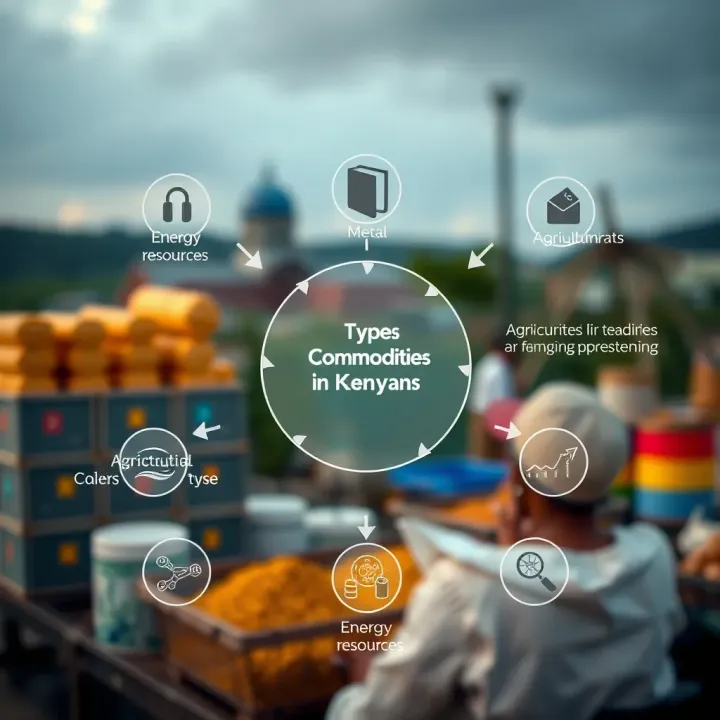
There are several types of commodities traded worldwide:
Agricultural products: tea, coffee, maize, sugar
Energy: crude oil, gasoline
Metals: gold, silver
In Kenya, agricultural commodities dominate due to the country's strong farming sector. Understanding how these products react to supply and demand in local and international markets helps you anticipate price moves.
Consider how the recent maize prices fluctuated during the drought of 2023; traders who predicted this change could protect themselves or profit using commodity futures contracts.
Different trading venues exist for commodities, including physical markets, commodity exchanges like the Nairobi Securities Exchange (NSE), and global platforms. Many Kenyan traders start with futures contracts, which commit the buyer or seller to exchange a specified quantity of a commodity at a set price and date. Futures help manage price risks and offer speculation opportunities.
To trade successfully, you need to know contract details, trading hours, settlement procedures, and risk management techniques specific to Kenyan contexts. Also, it's wise to stay updated on global trends since local commodity prices often follow international patterns.
Understanding the essentials lays a solid foundation for more advanced trading strategies. The following sections will cover market mechanics, practical strategies, and risk controls adapted for Kenyan traders.
Understanding the basics of commodity trading is essential for anyone looking to participate effectively in the market, especially within the Kenyan context. Commodities play a big role in our economy — from the tea grown around Kericho to metals mined in the Rift Valley. Knowing what commodities are, how they are traded, and the main market structures helps traders, investors, and entrepreneurs make better decisions, avoid pitfalls, and spot opportunities.
Commodities are physical goods that are interchangeable with others of the same kind, usually raw materials or primary agricultural products. In Kenya, this includes items that farmers, traders, and industries frequently deal with — such as maize, coffee, tea, sugar, and even minerals like titanium and fluorspar. These goods are often the backbone of rural economies and key to exports.
Agricultural products dominate Kenyan commodity trading. Coffee from Nyeri and Kericho, tea from Kericho and Nandi Hills, maize from the Rift Valley, and sugar from western Kenya are common staples. Metals like gold and rare earth minerals contribute too, albeit on a smaller scale, while energy commodities such as imported petrol influence the broader market indirectly. Knowing these categories helps traders focus on the goods most relevant to local supply chains and market demand.
Commodity trading usually happens in two main ways: the spot market and the futures market. In the spot market, goods are bought and sold for immediate delivery and payment, which is common among local farmers selling maize or tea directly after harvest. On the other hand, futures markets involve contracts agreeing to buy or sell a commodity at a future date for a set price. This helps Kenyan producers and buyers hedge against price swings— for example, a tea processor locking in a price before the harvesting season to budget for costs.
Some commodity trades involve physical delivery, meaning the actual goods change hands. This is typical in local markets or specific agreements where farmers deliver produce to processors or exporters. However, many commodity contracts, especially futures, settle in cash without physical delivery. This allows traders to profit from price changes without handling the goods, which is practical for investors in Nairobi or Mombasa who deal with coffee or metals prices without owning tons of physical stock. Understanding these methods can help traders choose the right approach based on their capacity and objectives.
Learning these basics positions you well to grasp more complex trading strategies and market dynamics that follow.
Commodity trading revolves around goods that are essential for economies and daily life. Globally, commodities like agricultural products, energy, and metals form the backbone of trade. Kenya, with its unique production strengths and regional connections, participates actively in this market. Understanding which commodities dominate and their local relevance can help traders and investors make informed decisions.
Coffee, tea, maize, and sugar are among Kenya's top agricultural exports and local staples. Kenya is renowned globally for its high-quality Arabica coffee and black tea, which earn foreign exchange at markets like the London International Financial Futures and Options Exchange (LIFFE). Maize and sugar, on the other hand, are vital for domestic demand and regional trade, especially within the East African Community.
Commodity traders should note that Kenya’s coffee and tea prices are heavily influenced by global demand and weather conditions in key growing regions. For maize and sugar, prices often fluctuate due to local harvest yields and government policies such as import tariffs or export bans. Such factors impact both producers looking for fair prices and buyers managing supply chains.
Seasonal cycles and local production significantly affect commodity availability and pricing in Kenya. The timing of rains influences harvest times, impacting supply volumes. For example, maize typically has two main planting seasons following the long and short rains, with harvests occurring a few months later. This cycle creates price patterns that experienced traders track closely to capitalise on fluctuations.
Understanding these cycles helps traders anticipate periods of scarcity or surplus. For instance, sugar shortages in some years push prices up, creating opportunities for importers and sellers. Such seasonal insights are useful whether trading on local exchanges or negotiating contracts directly with producers and buyers.
Crude oil, gold, and copper are significant commodities on the global stage, and Kenya has growing interest particularly in gold and energy. Crude oil prices affect Kenya indirectly through fuel imports, influencing transport and production costs. Meanwhile, Kenya’s gold deposits, especially in areas like Migori and Kakamega, attract local prospectors and investors.
Copper, while not plentiful in Kenya, plays a role regionally in manufacturing and infrastructure. Globally, copper prices often reflect industrial demand. Traders in Kenya watching these metals can link regional price trends with opportunities in mining-related investments or trading physical stocks where available.
Kenya’s position and regional dynamics in commodity trading matter especially as East Africa develops its infrastructure and resource sectors. Kenya serves as a gateway for goods entering and leaving neighbouring landlocked countries like Uganda and South Sudan. The Standard Gauge Railway (SGR) and port of Mombasa enhance Kenya’s role in regional trade of commodities including minerals and agricultural produce.
Additionally, Kenya’s government encourages exploration and mining, which may increase domestic supply of metals like gold. Regional comovement of prices means that political stability, infrastructure developments, and trade agreements within the East African Community influence commodity flows and prices. Kenyan traders who stay alert to these trends can better navigate cross-border opportunities and risks.
Knowing the common commodities and their seasonal or market-driven fluctuations is essential for trading success. Kenyan traders benefit from combining local production knowledge with global market trends to make smart moves in commodity trading.
Understanding the markets and platforms where commodities are traded is essential for anyone involved in commodity trading in Kenya. These platforms connect buyers and sellers, set price benchmarks, and offer opportunities to hedge or speculate. Knowing how these markets operate helps traders make informed decisions about when and where to enter trades.
Commodity exchanges such as the Chicago Mercantile Exchange (CME) and the London Metal Exchange (LME) serve as the backbone for global commodity pricing. These established exchanges facilitate transparent and regulated trading of commodities like oil, gold, and metals. Although Kenyan traders may not directly access these markets, the prices set on them have a significant impact on global benchmarks.
For example, an increase in crude oil prices on the CME can quickly influence petrol prices at local filling stations across Nairobi and Mombasa. Similarly, gold prices quoted on the LME affect Uganda and Tanzania, which indirectly impacts Kenyan dealers dealing in precious metals. Understanding these price movements gives Kenyan traders a sense of timing and risk in the commodities they trade.
International prices often dictate the local market rates for many commodities. Kenyan exporters of coffee or tea, for instance, closely watch global auction prices to decide when to sell their harvest. Likewise, fluctuations in global sugar prices can affect local prices, influencing consumer goods manufacturers.
Global commodity exchanges may seem far removed, but their price signals reach all the way to Kenya’s markets. Staying updated allows traders to anticipate market shifts and adjust their strategies accordingly.
The Nairobi Securities Exchange (NSE) is progressively integrating commodity trading features into its platform. While traditionally known for stocks and bonds, the NSE is now exploring ways to list commodity-linked products, including agricultural futures and commodity ETFs (exchange-traded funds). This development means more direct access and formal trading opportunities for Kenyan investors looking to diversify into commodities.
For instance, an investor could buy a contract linked to Kenyan maize prices on the NSE instead of navigating informal markets. This also offers better protection against fraud and clearer regulatory oversight.
Besides formal exchanges, private brokers and digital platforms play a crucial role in connecting commodity traders within Kenya and the East African region. Many farmers and small-scale traders rely on brokers to find buyers or sellers for products like pyrethrum or sunflower seeds. Digital platforms are emerging that combine mobile money payment options like M-Pesa with commodity trading, making transactions quicker and more secure.
Informal markets, often held in local trading centres and towns, remain vital for many traders. They offer flexibility and immediate settlement, but come with higher risks such as price opacity and counterfeit products. Understanding when to trade in formal venues versus informal settings helps traders manage these risks effectively.
Local platforms are increasingly bridging the gap between rural producers and urban buyers. Leveraging both formal and informal channels wisely can enhance profitability and market reach for Kenyan traders.
Understanding trading strategies and contract types is vital for anyone venturing into commodities trading in Kenya. These strategies help traders and producers manage timing, pricing, and delivery, which can mean the difference between profit and loss. Choosing the right contract type allows market players to plan better, respond to market shifts, and protect themselves against price swings.
Spot trading involves the immediate purchase or sale of commodities, with delivery typically occurring within a few days. This suits traders or buyers who need the goods right away — say, a tea exporter in Kericho wanting to meet current demand without waiting for futures contracts to mature. In contrast, forward contracts set a price today for delivery at a future date. This arrangement helps both producers and buyers lock in prices ahead of harvest or production, reducing uncertainty.
For example, a maize farmer in Western Kenya may enter a forward contract with a miller before planting season. This way, the farmer is assured of selling the maize at a fixed price, while the miller secures supply without worrying about sudden price hikes during harvest. Such contracts often happen over-the-counter (OTC), directly between parties, making them more flexible but less regulated than exchange-traded contracts.
The advantages for producers include security against price drops and guaranteed demand, which helps with planning and investment. Buyers benefit by preventing costs from ballooning if market prices rise unexpectedly. However, forward contracts carry the risk that prices might move favourably after signing, causing a missed opportunity. Still, for many Kenyan producers and traders, this risk is acceptable to gain stability.
Futures contracts are standardised agreements traded on commodity exchanges, obliging parties to buy or sell a commodity at a set price on a specified future date. Kenyan traders can use futures to hedge against price fluctuations. For instance, a coffee cooperative in Nyeri might sell futures contracts to lock in current prices, protecting itself if global coffee prices fall by the time of actual delivery.
Hedging with futures is a practical tool for managing risks, especially in volatile markets influenced by weather changes, political events, or global demand shifts. It provides a level of predictability crucial for budgeting and maintaining steady cash flow.
Options contracts give buyers the right, but not the obligation, to buy or sell commodities at a predetermined price within a time frame. This flexibility attracts speculators who aim to profit from price movements without committing to full contracts upfront. Using options with leverage means traders can control larger amounts of commodities with less capital, but the downside is the potential for significant losses if the market moves against them.
In Kenya, while futures and options are less common among smaller traders, understanding these tools is vital for brokers and investors involved in larger-scale trading or investment. Speculation via options can boost market liquidity but requires careful risk management to avoid heavy losses.
Knowing when to use spot, forward, futures, or options contracts aligns your trading with your risk appetite and financial goals. For many Kenyan traders, a mix of these strategies works best depending on their position in the supply chain and market outlook.
Trading commodities comes with noticeable risks that can affect gains or lead to losses, especially in Kenya where markets can be more unpredictable. Understanding these risks helps traders and investors make informed decisions and protect their capital. This section focuses on the main types of risks and practical ways to handle them, keeping Kenyan market specifics in mind.
Commodity prices are highly unstable, often shifting wildly within short periods. Several factors drive these price movements, including supply and demand imbalances, changes in production levels, and global economic trends. For instance, a poor maize harvest in Kenya due to drought usually causes prices to spike sharply in local markets, affecting both traders and consumers.
Additionally, prices react strongly to unexpected events. Political unrest in major oil-producing countries can reduce supply suddenly, sending petrol prices soaring in East Africa. Similarly, fluctuations in currency exchange rates, such as the weakening of the Kenyan Shilling against the US dollar, can raise the cost of imported commodities like petrol and fertilisers.
Global news, weather, and politics greatly influence commodity markets. Headlines reporting international conflicts, trade tariffs, or natural disasters create uncertainty and sometimes panic selling. For example, heavy rains during Kenya’s long rainy season can delay planting or harvesting, causing supply shortages and pushing up coffee or tea prices temporarily.
Political decisions, such as varying export taxes or subsidies, also alter market dynamics. When neighbouring countries impose import restrictions, Kenyan traders may find their usual markets closed or disrupted. These factors highlight how sensitive commodity trading is to external events beyond a trader’s control.
Hedging and diversification remain the two key tools for managing commodity trading risks. Hedging involves using forward or futures contracts to lock in prices and protect against adverse movements. A tea farmer in Kericho can sign a forward contract with a buyer at an agreed price before harvest, ensuring income even if market prices drop unexpectedly.
Diversification, on the other hand, spreads risk across different commodities or markets. Instead of focusing only on coffee prices, a trader might deal in maize, sugar, and gold too. This way, losses in one sector may be offset by gains in another, reducing overall exposure.
Contracts and insurance products add another safety layer. Using futures contracts helps secure future prices, while insurance covers losses from events like crop failure or theft. In Kenya, weather-indexed crop insurance, promoted by some agricultural cooperatives, compensates farmers when drought or excessive rainfall reduces yields.
These instruments are vital for stabilising returns and preventing total loss. However, they require knowledge and access to reliable brokers or platforms, which are increasingly available through Nairobi Securities Exchange (NSE) brokers and digital trading services.
Managing commodity risks proactively is essential. Kenyan traders who understand how to use hedging, diversification, and insurance tools stand a better chance of sustaining profits despite market ups and downs.
By recognising price drivers and applying these strategies, you can protect your investments and trade more confidently in Kenya’s commodity markets.
Looking for the best trading app in Kenya? 📱 Discover top platforms, key features, safety tips, and expert advice to trade confidently and smartly.
Explore Maven Trading in Kenya—learn how it works, legal rules, risks, and use of M-Pesa plus digital tools to trade smartly and protect your investments 📈💼.
📊 Understand how trading signals guide Kenyan traders on when to buy or sell in local markets. Learn the types, tools and risks to improve your strategy today!
📈 Learn how deriv trading works in Kenya, explore common types, strategies, and risks plus practical tips to navigate the local financial market confidently.
Based on 8 reviews