
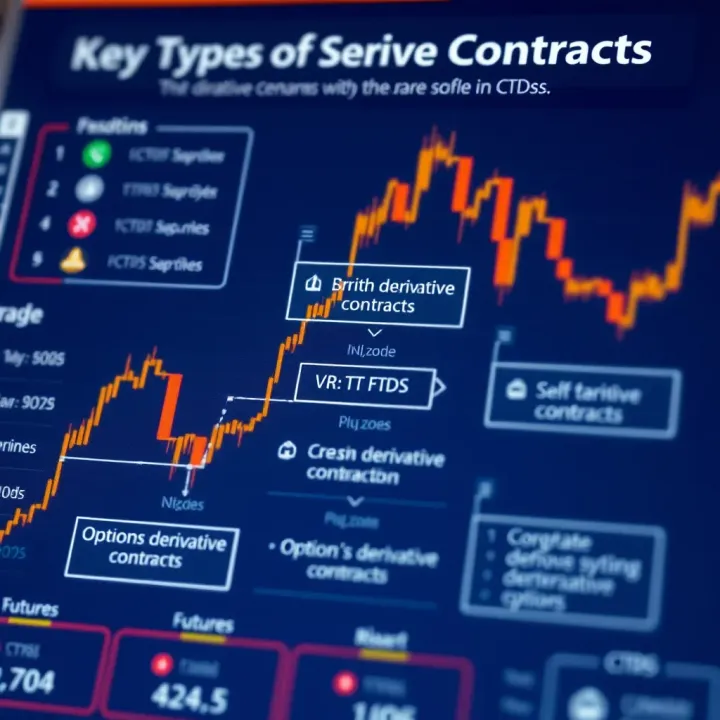
Understanding Deriv Trading in Kenya
Explore Deriv trading in Kenya 📊: Learn how derivatives work, key types, trading platforms, risks, and smart strategies to trade confidently and safely.
Edited By
Sophie Reed
Deriv trading is becoming a popular way for many Kenyans to engage in financial markets without owning the actual asset. Instead, traders buy and sell contracts derived from the price movement of underlying assets such as commodities, currencies, or indices. This method allows you to speculate on whether an asset’s price will rise or fall within a certain time frame.
Unlike traditional investing where you purchase shares or bonds and hold them long-term, deriv trading lets you enter shorter deals often lasting only minutes or hours. For example, with a currency pair like USD/KES, you can speculate on whether the Kenyan shilling will strengthen or weaken against the dollar without physically exchanging money.

Derivatives are essentially financial contracts that get their value from an underlying asset. You don’t own the asset, but participate in its price movements.
Common types of deriv trading you’ll find include options, contracts for difference (CFDs), and binary options. Kenyan traders often use platforms that offer these contracts, as they allow smaller capital outlay compared to outright buying stocks or forex. However, these contracts come with higher risk due to leverage and short-term market volatility.
Understanding how these contracts work and the conditions attached—like expiry time, strike price, and payout terms—is critical before putting your money in. Deriv trading demands careful study of market trends and quick decision-making.
In Kenya, the rise of mobile money services such as M-Pesa has made it easier to fund trading accounts. Still, you must be aware of regulatory frameworks set by the Capital Markets Authority (CMA) and trade responsibly to avoid losses.
This practical guide will break down the essentials of deriv trading for Kenyan users, covering types, strategies, common pitfalls, and how to navigate the local context. You’ll gain tools to assess if deriv trading suits your style, and ways to safeguard your investment while making smart moves in Kenya’s financial space.
Understanding what deriv trading means is the first step for anyone looking to participate in Kenya’s growing financial markets. Deriv trading involves buying and selling contracts whose value depends on an underlying asset, such as stocks, currencies, or commodities. This method allows traders to gain exposure to these assets without actually owning them, which opens up more opportunities to profit or manage risk.
Financial derivatives are contracts whose prices are linked to the value of an underlying asset. For example, a contract might track the price movement of Safaricom shares or the exchange rate between the US dollar and Kenyan shilling. The value of these derivatives goes up or down as the underlying asset's price changes. This creates opportunities for traders to speculate on price direction without the need to buy or sell the actual asset.
Deriv trading differs from owning assets in some key ways. When you own a share of Equity Bank, you have ownership rights, including dividends and voting. But when you trade a derivative on that stock, you’re simply betting on its price movement. Since you don’t own the asset, you avoid paying full upfront costs and dealing with ownership formalities. However, this also means you don’t have the same rights as a shareholder, and your position depends entirely on contract terms and market conditions.
One reason many Kenyan traders turn to deriv trading is the availability of leverage. Leverage lets you control a larger position with a small amount of capital. For instance, with KSh 10,000 you might trade contracts worth KSh 100,000. This boosts potential profits but also increases risks. Additionally, deriv trading gives access to markets and assets that might be difficult or costly to buy outright. This widens options for traders with limited funds.
Besides speculation—betting on price movements—deriv trading also helps hedge risks. A farmer growing maize, for example, could use derivatives on commodity prices to protect against price drops. Similarly, importers and exporters in Kenya might hedge against fluctuations in the US dollar or euro using forex derivatives. This risk management aspect makes deriv trading a practical tool beyond pure profit-making.
Remember, while deriv trading offers tools like leverage and hedging to Kenyan traders, understanding the terms clearly and managing risks carefully is essential to avoid big losses.
By grasping these basics about what deriv trading means, you build a solid foundation to explore how it works and the strategies that make it a fit for different types of traders in Kenya’s financial environment.
Understanding how deriv trading operates matters because it shapes your approach to making trades and managing risks. Kenyan traders often deal with fluctuating markets, so knowing the nuts and bolts behind trading contracts rather than owning assets helps you act fast and adjust your strategy accordingly.
Most deriv trades depend on underlying assets such as stocks, indices, commodities, and currency pairs. For example, a trader in Nairobi might choose to trade on the NSE 20 index, oil prices, or the KSh/USD forex rate, using these as the base to forecast price movements without actually owning the asset itself. This setup allows you to speculate on price changes without the hassle of buying or storing physical goods or shares.
Contracts come in different flavours like options, futures, and Contracts for Difference (CFDs). Options give you the right but not the obligation to buy or sell at a set price by a certain date. Futures bind you to buy or sell an asset on a future date at a fixed price. CFDs, common in many Kenyan trading platforms, let you profit from price differences without owning the asset. These contract types offer flexibility in choosing how much risk and exposure you want, tailoring your strategy to suit your capital and market outlook.
Opening a position means you enter a trade, either buying (going long) if you expect the price to rise, or selling (going short) if you foresee a drop. For instance, if you expect the USD/KES to strengthen, you open a buy position to profit from the rise. Closing a position happens when you exit the trade, locking in gains or limiting losses. Understanding when and how to open or close matters because timing can hugely affect your profits or losses.
Brokers and trading platforms act as the middlemen between you and the market. In Kenya, platforms that integrate M-Pesa or offer local bank transfers make funding your account easier. Choosing a broker registered with the Capital Markets Authority (CMA) ensures your funds are safer and that the trading environment is regulated. These platforms provide the tools—such as charts, live prices, and order options—needed to place and manage your trades smoothly. Always pick a broker that suits your trading style and offers clear, quick execution.
Mastering the mechanics of derivatives and trading steps helps you trade smarter and react faster to market changes. It’s not just about guessing price moves but knowing how to act on them responsibly.
By focusing on these core elements, Kenyan traders can better navigate deriv trading and avoid costly mistakes that often stem from lack of preparation or over-reliance on guesswork.
Kenya’s growing interest in financial markets has made derivative trading accessible through various forms tailored to different trader needs and experience levels. Understanding the popular types available locally helps traders choose the right pathway, considering factors like complexity, risk, and regulatory environment.
How CFDs work: CFDs are financial contracts that let you speculate on price changes of assets such as stocks, commodities, or indices without owning the underlying asset. When you open a CFD position, you agree to pay or receive the difference between the opening and closing price. This means you can profit from both rising and falling markets, which is especially useful in Kenya where market volatility can be high.
CFDs also enable traders to use leverage, meaning they only put up a fraction of the full trade value. This boosts potential gains but also increases risk. For example, a Kenyan trader might take a position on Safaricom shares via CFDs, speculating on price movement without the need to buy the actual stock, thus reducing capital requirements.
Examples relevant to Kenyan traders: Kenyan investors often use CFDs to trade local blue chips listed on NSE, like KCB Group or Equity Bank, as well as global assets like oil or gold. This gives them a chance to diversify without the need for large upfront capital. Moreover, since CFDs settle in cash, this helps avoid logistical challenges related to physical delivery.
Understanding binary options: Binary options are a simpler form of derivatives where the trader bets on a yes/no outcome within a fixed timeframe—such as whether the price of the USD/KES exchange rate will rise above a set level. The return is fixed, which means risk and reward are clear from the start.
This straightforward approach appeals to beginners or those who want to limit potential losses. However, binary options are highly speculative and often compared to betting, making discipline and choice of platform essential.
Legal considerations and risks in Kenya: Kenya’s Capital Markets Authority (CMA) has warned against unregulated brokers offering binary options due to widespread scams. While trading binary options through licensed platforms can be legal, many fraudsters target Kenyan traders using deceptive schemes. Therefore, Kenyan traders must confirm platform regulation and avoid offers promising unrealistic returns.
Trading currency pairs: Forex derivatives allow traders to speculate on the value changes between currency pairs, such as USD/KES or EUR/USD. This is relevant for Kenyans engaged in trade, remittances, or tourism whose fortunes can be affected by currency movements. Forex markets are highly liquid and operate 24/5, providing many trading opportunities.
Leverage and margin requirements: Forex trading typically involves high leverage, sometimes up to 100:1 or more, depending on the broker. This means a small deposit (margin) controls a much larger position size. While leverage can multiply gains, it also exposes traders to significant losses. For example, a Kenyan importer monitoring USD/KES may benefit from forex derivatives to hedge against shilling fluctuations but must carefully manage margin calls to avoid losing more than intended.
When trading derivatives in Kenya, choose platforms regulated by the CMA or recognised international bodies, know your risk limits, and start small to build experience gradually.
By understanding these popular derivative forms, Kenyan traders can better navigate risks and opportunities, tailoring their strategy to local and global markets while leveraging available technology and payment options like M-Pesa for seamless transactions.
Deriv trading offers exciting opportunities but carries significant risks that traders in Kenya must understand. The fast-moving nature of derivatives means prices can change sharply, sometimes within minutes. This volatile environment demands careful attention and risk control to avoid heavy losses.
Market volatility directly influences deriv trading because small price swings can yield large profits or losses. For instance, if you're trading currency derivatives like the USD/KES pair, political events or economic reports from the US or Kenya can cause sudden jumps in price. This unpredictability means that a position might move against you quickly, leading to losses before you have time to react.
Leverage lets you control a large position with a small deposit, often 10 to 100 times your capital in Kenya’s forex markets. While this magnifies gains, it also magnifies losses. Over-leveraging occurs when traders take on excessively large positions relative to their capital. For example, using 100:1 leverage on a KSh 10,000 balance means controlling KSh 1,000,000 worth of contracts. A 1% adverse move can wipe out your entire balance. Many new traders fall into this trap, losing funds rapidly.
Kenyan traders should prioritise brokers regulated by recognised authorities such as the Capital Markets Authority (CMA) or reputable international bodies like the Financial Conduct Authority (FCA) from the UK. Regulation helps ensure brokers follow fair trading practices, keep client funds separate from company accounts, and provide transparent trading conditions. Trading with unregulated brokers increases the risk of unfair dealing and difficulties in withdrawing your money.
Deriv trading attracts scammers who exploit lack of knowledge among traders. Typical frauds include fake platforms, promises of guaranteed profits, or brokers who stop payouts after you earn profits. For example, there have been reports in Kenya of platforms asking clients to deposit large amounts via M-Pesa but never allowing withdrawal. Always verify a broker’s licence and read reviews before committing funds.
A stop-loss order limits loss by automatically closing your position when the price hits a set level. This tool is vital in a volatile market. Suppose you buy CFDs on Safaricom shares at KSh 30 and set a stop-loss at KSh 27. If the share dips to this point, the trade closes, preventing further losses. Stop-loss orders help contain losses and preserve capital.
Managing trade size relative to your account is fundamental. Kenyan traders should avoid risking more than a small percentage (1-3%) of their total capital on a single trade. For example, with KSh 50,000, risking KSh 500 to KSh 1,500 per trade keeps you afloat even after several losing moves. This approach slows down capital erosion and builds a disciplined trading habit.
Managing risks is not about avoiding losses completely but limiting them so you can stay in the game longer and seize better chances when they arise.
Understanding these risks and applying practical controls prepares Kenyan traders for the challenges in deriv trading. Proper awareness protects your funds and improves chances of success in this fast-paced market.
Successful deriv trading in Kenya depends largely on having solid strategies that help you navigate the fast-moving markets. These strategies allow traders to manage risks, spot opportunities, and trade with confidence rather than luck. For Kenyan traders, it’s vital to combine technical skills and disciplined planning to handle the complexities of derivative contracts effectively.
Fundamental analysis means keeping track of economic factors that influence the prices of assets underlying derivative contracts. For example, a Kenyan trader interested in forex derivatives might closely watch Kenyan shilling (KES) exchange rate movements against the US dollar, following updates from the Central Bank of Kenya (CBK), inflation reports, or East African Community (EAC) trade developments. These indicators affect currency strength and can give you the edge to predict price shifts.
Besides Kenya-specific news, global events like changes in US Federal Reserve interest rates or political developments in major economies also impact asset prices. Following reliable news sources and economic calendars helps you anticipate volatility spikes or trends that the market may react to soon.
Technical analysis focuses on price charts and market behaviour to forecast short-term movements. Common tools include trend lines, moving averages, and momentum indicators like Relative Strength Index (RSI). For instance, spotting a “head and shoulders” pattern on a stock’s price chart might suggest a pending reversal, signalling whether it’s time to enter or exit a trade.
For Kenyan traders using platforms offering CFDs or forex derivatives, regularly studying charts and applying indicators can highlight entry points with favourable risk-reward ratios. The combination of technical signals often strengthens your confidence to execute trades instead of relying on guesswork alone.
A well-defined plan includes knowing exactly when to open or close a trade. Establishing entry points involves considering favourable price levels after analysing fundamentals and chart signals. For example, if the Kenyan shilling shows signs of strengthening against the dollar due to CBK policy changes, you might set a buy entry at a specific KES/USD price level.
Setting exit points, such as take-profit and stop-loss orders, helps protect against heavy losses and locks in profits when the market moves as expected. Kenyan traders often underestimate discipline here, leading to emotional decisions whenever markets swing.
Clear trade planning is like carrying an umbrella in Nairobi’s long rains—you avoid getting caught unprepared.
Keeping a journal to record details like trade rationale, entry/exit prices, outcomes, and thoughts is a simple yet powerful practice. It allows you to review past trades, identify patterns in your successes and mistakes, and refine your strategies over time.
For example, if you notice losing trades following unexpected news on Shilling’s performance, you can adjust your approach to factor in such events better. The journal serves as a personal coach that builds your trading skills logically instead of just leaving you to learn from trial and error.
With consistent use, disciplined trade planning and analysis keep you sharp and increase your chances of succeeding in Kenya’s derivative markets.
Comparing deriv trading to traditional investing is key for Kenyan traders to understand which approach suits their goals and risk appetite. While both involve financial markets, they operate very differently and offer distinct advantages and challenges. Kenyan investors often face decisions about whether to buy and hold assets like stocks or property or trade contracts based on price movements without ownership. Grasping these differences helps take clearer, more informed steps.
Owning stocks or real estate means having a tangible share in an asset. In Kenya, holding shares in a company listed on the Nairobi Securities Exchange (NSE) gives you voting rights and possibly dividends, which provide long-term income. Property ownership in Nairobi or the Coast region, for example, offers rental income plus potential capital appreciation over the years. This direct ownership often suits investors looking for steady growth and value retention.
Additionally, owning assets tends to be less stressful since you don't need to monitor markets constantly, unlike deriv trading. You can hold shares or land for years, benefiting from gradual growth and inflation protection. This aspect is particularly attractive in Kenya, where economic cycles and political factors cause market shifts.
Deriv trading focuses on contracts derived from underlying assets; you don’t own the asset itself. This allows access to markets without large upfront capital, a big plus for Kenyan traders with limited funds. For instance, using Contracts for Difference (CFDs) on forex or commodities lets you speculate on price changes with leverage, meaning you can control larger positions with smaller deposits.
This flexibility enables quick entry and exit from trades, suitable for short-term opportunities like reacting to Kenya's economic announcements or currency fluctuations. However, while derivatives offer higher profit potential, they also carry greater risk due to leverage and complexity. So, this method requires more active management and a good grasp of market movements.
Traditional investing generally fits long-term horizons where patience pays off. For example, a Kenyan retiree might invest in NSE blue-chip stocks or buy land to pass on to family. These investments grow steadily, weathering economic ups and downs.
Deriv trading suits those aiming for short-term gains, often closing positions within hours or days. Traders looking to profit from currency swings, commodity prices, or market news react fast. However, the short-term focus demands discipline and constant market monitoring, which might not suit everyone.
Deriv trading's leverage can amplify gains but also losses, so it's not ideal if you prefer low-risk options. Kenyan traders new to financial markets might find it safer to start with traditional investments like savings bonds or blue-chip shares.
On the other hand, experienced traders with higher risk appetite and good market knowledge may find deriv trading rewarding. Carefully managing risk through limits and stop-loss orders is essential. Ultimately, choosing between deriv trading and traditional investing depends on your financial goals, time available, and ability to handle market swings.
Understanding these key differences will help you pick wisely and avoid pitfalls in Kenya's financial markets, whether you seek steady growth or quick profits.
Starting deriv trading in Kenya demands careful consideration given the unique local financial landscape. Understanding how to pick the right platform, learning about available resources, and gradually building experience can save you costly mistakes. Since deriv trading involves contract-based speculation rather than asset ownership, getting these basics right equips you to manage risk while capitalising on market opportunities.
A regulated trading platform ensures your funds are under some form of oversight, reducing the risk of fraud. In Kenya, although direct CMA (Capital Markets Authority) regulation of deriv trading platforms is less common, reputable brokers often adhere to international standards such as FCA (Financial Conduct Authority) or ASIC (Australian Securities and Investments Commission). Platforms regulated by such authorities usually have stricter rules for client protection.
For example, choosing a platform regulated by a recognised body provides some peace of mind that your deposits are segregated and that there is a formal mechanism for dispute resolution. Without this, you risk dealing with unlicensed entities that might disappear with your funds or manipulate prices.
Ease of depositing and withdrawing funds directly impacts your trading experience. Many Kenyan traders prefer platforms that accept M-Pesa payments given its ubiquity and simplicity. Integration with M-Pesa means you can fund your trading account without cumbersome international bank transfers which might take days and incur high charges.
Platforms that support Lipa Na M-Pesa or M-Pesa Paybill options streamline the funding process. This is especially important for retail traders who may want to start with modest amounts and need flexible, prompt access to funds. Besides M-Pesa, some brokers also accept bank transfers from local banks like Equity or KCB, but M-Pesa remains the most convenient for many.
Trading derivs successfully requires constant learning. Fortunately, there are numerous Kenyan and global resources to help you. Kenyan financial blogs, YouTube channels like those run by local traders, and webinars organised by Nairobi Stock Exchange often cover basics and advanced strategies.
Besides, global sites offer free tutorials, courses, and up-to-date market analyses. Combining local insights with international perspectives helps you understand market nuances and Kenyan economic factors that affect asset prices.
Most platforms offer demo accounts that let you practise trading without risking real money. This is crucial for beginners to familiarise themselves with the platform's layout, test strategies, and understand how derivatives react to market changes.
For example, you can simulate trading CFDs on NSE stocks or forex pairs, observing how leverage amplifies gains and losses. Using demo accounts builds confidence, enabling you to enter live trading with clearer expectations and better risk control.
Remember, no matter how promising the platform or strategy looks, only trade with money you can afford to lose. Practice, educate yourself well, and trade responsibly to navigate Kenya’s deriv trading space safely.
Explore Deriv trading in Kenya 📊: Learn how derivatives work, key types, trading platforms, risks, and smart strategies to trade confidently and safely.

📊 Discover how Deriv Trading View helps Kenyan traders analyze markets, read signals, and customize charts to boost trading decisions effectively.

📊 Explore Deriv X's features, account types & trading tools. Learn how this platform suits Kenyan traders with smart risk tips & helpful resources 🇰🇪

Explore Deriv.com, a trusted trading platform in Kenya🇰🇪. Learn features, account types, security tips🔒, and trading options for smarter decisions📈.
Based on 5 reviews