
Integrate TradingView Charts on Deriv Platform
📊 Learn how to integrate and customize TradingView charts on Deriv platform, tackle common developer challenges, and enhance trading experience effectively.
Edited By
James Turner
TradingView charts have become essential tools for many traders and investors looking to navigate financial markets confidently. Whether you're trading on the Nairobi Securities Exchange (NSE) or monitoring forex pairs and global stocks, TradingView offers a versatile platform tailored for diverse needs.
At its core, TradingView combines clear charting tools with powerful features that help you analyse price movements, spot trends, and make informed decisions. Many Kenyan traders appreciate its user-friendly interface that works well even on modest internet speeds and can be accessed easily from mobile or desktop.
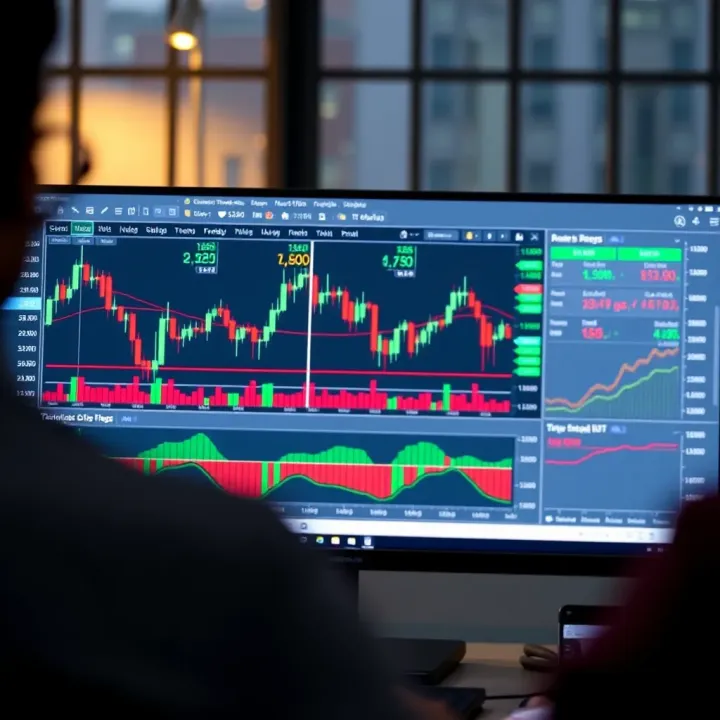
Here’s why getting comfortable with TradingView is worth your time:
Interactive charts: You can quickly switch between timeframes, from minutes to daily or weekly views, allowing flexible strategy adjustments.
Wide range of instruments: Beyond NSE equities, it supports forex, commodities, cryptocurrencies, and global stocks, letting you diversify or follow events influencing the markets.
Indicators and drawing tools: Customise your analysis with popular technical indicators and simple drawing options like support/resistance lines or Fibonacci retracements.
Community ideas: See trade setups and insights shared by a global pool of traders; this can provide new perspectives for your own strategies.
Mastering chart analysis, especially with a reliable tool like TradingView, means you’re no longer blindly guessing market moves but making choices backed by data and clear signals.
In the Kenyan context, you don’t need expensive software or complex installations. Starting is as simple as creating an account, setting up your preferred charts, and practising interpreting real data.
This practical guide will walk you through setting up TradingView for Kenyan traders, customising charts, understanding key indicators, and applying this knowledge to your investment or trading routine.
By learning to use TradingView efficiently, you’re stepping into a stronger position to safeguard your capital and seize profit opportunities, whether it’s in NSE shares, forex trading via local brokers, or global markets.
TradingView charts are a game changer for traders because they provide clear, real-time data and analysis tools in one place. For Kenyan traders, understanding how to use these charts is crucial since they enable quick decisions based on up-to-date market movements. This introduction lays the foundation by explaining the key features of TradingView that help you track market trends, spot opportunities, and manage risks.
TradingView is an online charting service trusted worldwide for analysing financial markets. It combines detailed chart tools with social features, allowing traders to share ideas and learn from others. For Kenyan users, this platform is easy to access via browsers and mobile apps, making it a handy tool whether you’re at home, the office, or even on the matatu.
The platform supports several chart types: candlestick, line, bar, and Heikin Ashi. Candlestick charts are popular because they show price action clearly with open, high, low, and close prices. Line charts suit those preferring a simple overview of trends. Meanwhile, Heikin Ashi smooths out price fluctuations, helping traders see the bigger picture, which can be helpful when trading volatile assets like forex or cryptocurrencies.
TradingView offers access to various markets including stocks listed on the Nairobi Securities Exchange (NSE), global forex pairs, cryptocurrencies like Bitcoin and Ethereum, and commodities such as gold and oil. This variety allows Kenyan traders to diversify investments and take advantage of both local and international opportunities. For example, a trader can watch NSE shares during market hours and switch to crypto charts outside Kenyan trading times.
TradingView's user-friendly interface suits beginners without sacrificing depth for advanced users. You can easily switch between different markets and chart types with a few clicks. The platform’s cloud-based storage means your customised charts and saved indicators are accessible on any device. This flexibility fits well with Kenyan traders who often switch between phones, laptops, and tablets.
While TradingView itself does not integrate directly with M-Pesa, many Kenyan fintech services offer bundles or subscriptions payable via M-Pesa for premium market data and TradingView features. This local payment convenience removes barriers for Kenyan traders who rely on mobile money, making it easier to upgrade to paid plans that offer extra indicators or real-time data.
TradingView supports NSE-listed stocks alongside global markets, helping Kenyan traders stay connected to both local and international trends. This is important because the NSE doesn’t operate 24/7, so you get global markets to explore outside Nairobi’s trading hours. Moreover, the community around TradingView includes users from Kenya and other East African countries, offering insights that resonate with local trading habits and economic realities.
By mastering TradingView charts, Kenyan traders equip themselves with a powerful toolkit to follow market moves, test strategies, and make informed decisions without needing expensive software or courses. This introduction is your gateway to tapping into those resources effectively.
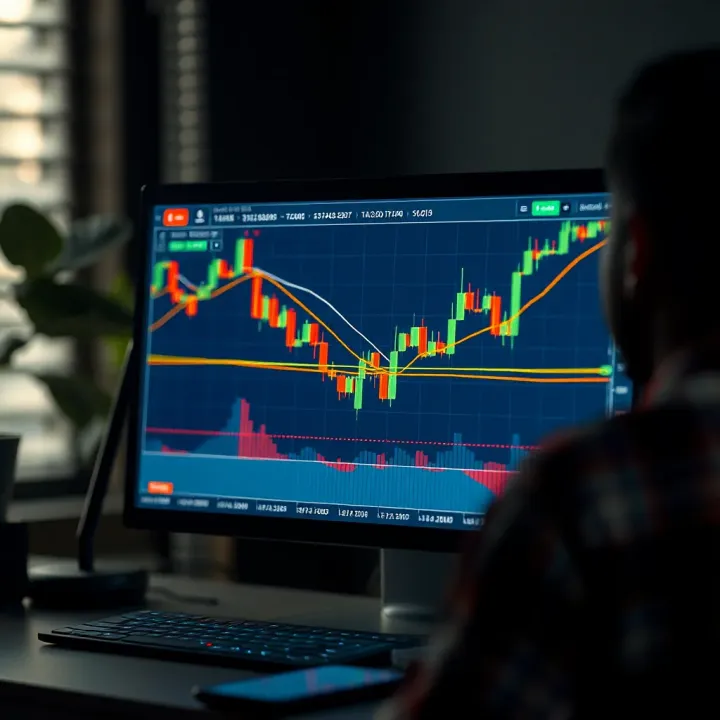
Setting up and customising your TradingView chart is essential for effective market analysis. Tailoring charts to your trading style and preferred assets saves time and brings clarity to the complex data. Kenyan traders often watch volatile forex or NASI stocks, so selecting the right tools on TradingView can mean the difference between spotting a golden opportunity or missing it.
Candlestick charts are among the most popular for traders globally, and for good reason. Each candlestick shows the opening, closing, highest, and lowest prices within a set period, giving you detailed insight into market sentiment. For instance, a single red candle after several green ones might suggest a bearish reversal — a chance for a trader in Nairobi or Mombasa to adjust positions quickly.
Line and bar charts offer simpler alternatives. Line charts link closing prices over time, providing a clean view of general trends. They are excellent for beginners or for spotting long-term movements without noise. Bar charts, on the other hand, show price range like candlesticks but with a slightly different format, which some traders prefer for quicker pattern recognition.
Heikin Ashi and other specialised charts smooth out market fluctuations to highlight trends more clearly. Heikin Ashi charts average price data to reduce the usual 'noise' from sudden ups and downs. This approach helps Kenyan traders avoid emotional decisions during choppy periods, making it easier to hold positions or time exits, especially when trading forex pairs like USD/KES.
Adjusting timeframes and intervals is crucial. Daily, hourly, or even 5-minute charts serve different purposes. Day traders in Nairobi might focus on 15-minute intervals to catch sharp price moves during market hours. Meanwhile, long-term investors may rely on weekly or monthly charts to capture bigger trends without being distracted by short-term swings.
Colour schemes and backgrounds impact readability and comfort, especially during extended analysis sessions. TradingView lets you choose dark or light backgrounds and adjust candlestick colours. For example, a black background with vivid green and red candles reduces eye strain in low-light conditions common in Kenyan homes and offices late at night. Using colours you respond to well can improve focus and reduce mistakes.
Saving presets for quick access streamlines your workflow. After setting your preferred chart type, timeframe, and colours, saving a preset allows you to launch TradingView and jump straight to your familiar setup. This feature is handy when managing multiple markets or during fast-moving sessions before Kenyan market close, ensuring you never waste time adjusting settings.
Customised chart setups form the backbone of consistent, disciplined trading. By investing time in setting up TradingView charts correctly, you create a reliable workspace tailored to your trading goals and Kenyan market conditions.
This hands-on control helps traders stay ahead and make clear decisions amid market noise, improving profitability over time.
Technical indicators are essential tools that help traders make better decisions by analysing past price data to predict future market movements. For Kenyan traders, using indicators on TradingView charts can bring clarity to the often volatile and fast-moving markets, whether in forex, stocks, or cryptocurrencies. These tools simplify complex price action into easier-to-understand signals, helping you time your entries and exits with more confidence.
Moving averages smooth out price fluctuations to reveal the underlying trend. The Simple Moving Average (SMA) averages prices over a fixed period, often used to identify support or resistance zones. The Exponential Moving Average (EMA) gives more weight to recent prices, making it more responsive to recent market changes. Kenyan traders often watch the 50-day and 200-day moving averages for stocks listed on the Nairobi Securities Exchange (NSE) or forex pairs involving the Kenyan shilling, using crossovers between these averages as buy or sell signals.
RSI measures momentum by comparing recent gains and losses on a scale of 0 to 100. An RSI above 70 typically signals an overbought market, suggesting a possible price pullback, while below 30 indicates oversold conditions, signalling a potential buying opportunity. In markets like forex, where prices can shift rapidly due to global events or local policies, RSI helps identify when a currency like the Kenyan shilling may be stretched too far in one direction.
The Moving Average Convergence Divergence (MACD) is a momentum indicator showing the relationship between two EMAs. When the MACD line crosses above the signal line, it may indicate upward momentum, and vice versa. Bollinger Bands consist of a moving average with two standard deviation lines above and below. They reflect market volatility; when prices touch the outer bands, it often signals overbought or oversold conditions. These indicators are popular among Kenyan crypto traders who deal with high volatility and look for signals to avoid sudden swings.
Using several indicators together can provide a fuller picture and reduce false signals. For example, combining RSI with moving averages helps confirm whether a trend will continue or reverse. On TradingView, you can overlay many indicators on one chart, allowing Kenyan traders to customise their analysis depending on the asset or timeframe. Just be cautious though, overcrowding charts with too many indicators can confuse rather than clarify.
Default settings on TradingView might work initially, but Kenyan traders often adjust parameters like the period length to better suit local market conditions or personal strategies. For instance, shortening the EMA period may make it more sensitive to fast-moving forex pairs involving KSh, while longer periods suit longer-term NSE stock trends. Custom settings let you align indicators with your trading timeframe and preferred assets.
Indicators provide signals rather than guarantees. It’s critical to interpret them alongside price action and other factors. For example, an RSI near 70 during a strong uptrend might not mean immediate reversal but a continuation of momentum. Similarly, a MACD crossover is more meaningful if supported by volume or a key support level on the chart. Kenyan traders should combine signals with awareness of local events, such as currency policy announcements or earnings reports from NSE-listed firms.
Using technical indicators effectively demands practice and adaptation to the specific asset and market you trade. On TradingView, Kenyan traders have access to many smoothing tools that, when used smartly, improve trading decisions and confidence.
Drawing tools and annotations are vital for making sense of price movements and market trends. They allow you to identify potential entry and exit points clearly, not just by relying on indicators but also by visually mapping important levels. For Kenyan traders who often juggle between local equities and Forex or even cryptocurrencies, using these tools improves decision-making and reduces guesswork.
Trendlines and support/resistance levels play a significant role in technical analysis. A trendline connects two or more price points and shows the general direction of the market — upward, downward, or sideways. Support and resistance levels mark price points where the market has historically stalled or reversed. For instance, if Safaricom shares keep bouncing back at KSh 30, that price acts as a support level. Drawing these lines on TradingView helps you anticipate where prices might stall or break through next.
Fibonacci retracements are popular among traders for spotting possible reversal zones during price corrections. They rely on ratios derived from the Fibonacci sequence (23.6%, 38.2%, 50%, 61.8%, etc.) to predict the extent of a pullback before the trend continues. Say the NSE 20 Index rallies from 1,200 points to 1,400 points; applying Fibonacci retracements reveals zones where price might find support, helping you time a buy or sell decision.
Shapes and text notes offer straightforward ways to mark important chart observations. You might use rectangles to highlight consolidation zones or arrows to point out significant breakouts. Text notes help keep track of your thoughts directly on the chart, such as "Watch this level for a breakout" or "Possible reversal forming here". This proves handy when revisiting charts later or sharing analysis with friends or colleagues.
Using layering and colour coding keeps your charts organised and easy to read. Assign different colours to trendlines, resistance levels, or Fibonacci retracements depending on their strength or timeframe. For example, use thick red lines for major resistance and thin green lines for minor support. Layers ensure one drawing doesn't obscure another, so you clearly see key information at a glance without clutter.
Saving and sharing your charts on TradingView makes collaboration with other traders or clients simple. Kenyan traders can export charts with annotations or save templates for future use. Sharing insights on platforms or through messaging apps encourages feedback and new perspectives, which is especially valuable when navigating volatile markets.
Keeping charts clean for better decisions means avoiding overloading your charts with too many drawings and indicators. Too many lines or text can cause confusion, making it hard to interpret data quickly. Keep only the necessary tools visible and remove old annotations regularly, so your focus stays sharp on current market conditions.
Well-marked and clear charts reduce emotional trading mistakes, giving Kenyan traders an edge in fast-moving markets.
By mastering these drawing tools and annotation techniques, you'll enhance your ability to read TradingView charts with precision, making your trading more informed and strategic.
TradingView offers a broad range of features that can give Kenyan traders an edge in the markets. Beyond just viewing charts, its tools help you respond quickly to market changes, connect with other traders, and even execute trades directly. Tapping into these features means you can trade smarter and manage your investments more efficiently.
Setting price and indicator alerts is one powerful way to keep on top of market moves without staring at your screen all day. You can set alerts for specific price points or when indicators like the RSI (Relative Strength Index) signal overbought or oversold conditions. For example, if you trade forex pairs like USD/KES, an alert can notify you once the pair hits levels you’re watching. This lets you act quickly, avoiding missed chances.
Receiving notifications via mobile and email is vital for traders on the go. TradingView sends instant alerts to your smartphone or inbox the moment your criteria are met. This ensures you don’t miss swings in the NSE 20 index or changes in crude oil prices affecting the shilling. Since many Kenyan traders rely on mobile devices, timely notifications allow you to react fast, whether you're commuting in a matatu or at a nyama choma joint.
Practical use cases for Kenyan market trading include monitoring the Nairobi Securities Exchange (NSE) for companies like Safaricom or KCB Group. For example, if Safaricom’s stock price approaches a critical support level you’ve identified, your alert can prompt a quick buy or sell decision. Also, alerts on forex and crypto markets help traders manage volatility, especially during periods influenced by global events or CBK policy decisions.
Following experienced Kenyan and global traders on TradingView lets you tap into expert ideas and strategies. You get to see how seasoned analysts interpret charts and indicators, which can enhance your own understanding. For instance, a Nairobi-based trader might share insights on EABL’s price movements, allowing you to learn from local market context.
Publishing your own ideas and charts is another useful feature. When you share your analysis, you not only build your reputation but also receive feedback from peers. This interaction can help refine your approach. Kenyan traders who publish can discuss nuances like the effects of county elections on local stocks, which might not be obvious in global analyses.
Benefits of collaborative learning go beyond individual insight. By engaging in discussions and group chats within TradingView’s community, you can exchange practical tips relevant to Kenya’s trading environment. This peer learning speeds up skill-building and builds a support network that keeps you motivated and informed.
Linking TradingView to broker accounts allows seamless transition from analysis to action. When connected, you can place orders directly, reducing the time gap between spotting an opportunity and executing a trade. This feature is particularly useful during volatile sessions on forex or commodities markets affecting the Kenyan shilling.
Trading directly from charts means your decision-making process becomes more efficient. Seeing the price action, indicators, and drawing tools in one place while placing trades means fewer mistakes and quicker responses. This is handy for active traders tracking intraday movements in shares like Equity Bank or international equities.
Popular brokers compatible with TradingView in Kenya include those like FXTM, IG Markets, and Interactive Brokers. These platforms support integration, offer diverse markets, and facilitate payments through methods common in Kenya, including bank transfers and sometimes M-Pesa. Using brokers linked with TradingView simplifies trading as you already have charting and execution on the same system.
Mastering these features turns TradingView from a simple chart tool into a comprehensive trading companion, tailored to the needs of Kenyan traders navigating both local and global markets.
📊 Learn how to integrate and customize TradingView charts on Deriv platform, tackle common developer challenges, and enhance trading experience effectively.
Learn how to easily log in to Deriv with step-by-step tips for Kenyan traders 🇰🇪. Stay secure 🔒 and avoid common issues for smooth trading 🚀.
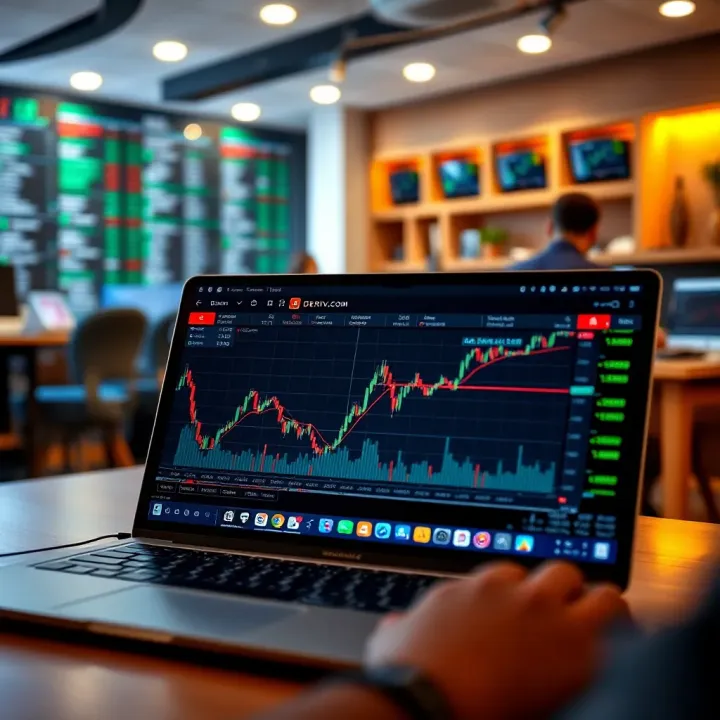
Discover how Kenyan traders can navigate Deriv.com with ease 🌍. Explore its features, account types, trading tools, and smart risk tips 📊.
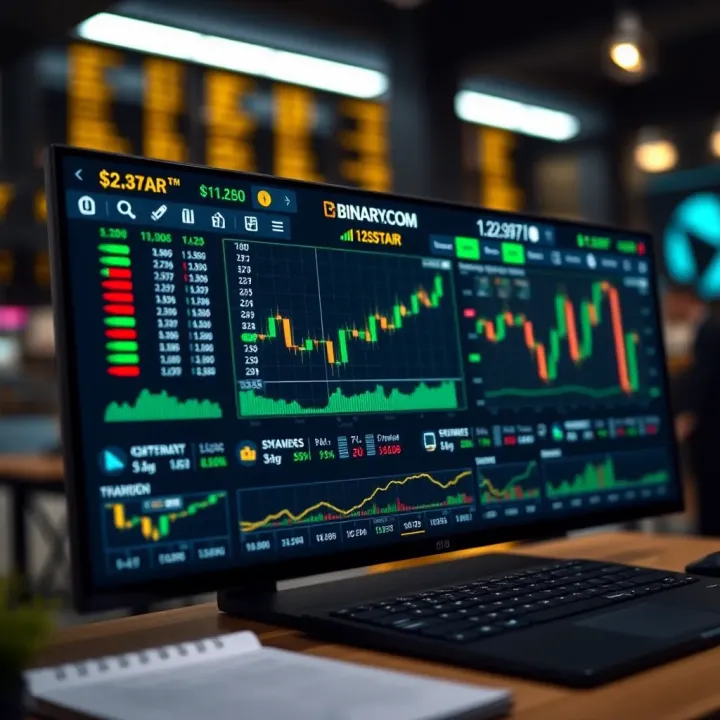
Explore how Binary.com works for Kenyan traders 🇰🇪. Learn about account setup, trade types, security, payments, and regulations to trade smartly and safely.
Based on 10 reviews