

Understanding Derivative Trading in Kenya
Explore the essentials of derivative trading in Kenya 📈. Learn types, benefits, risks, key strategies, and local regulations to make informed investment decisions.
Edited By
Hannah Lewis
Fibonacci retracement levels have become a popular tool for traders worldwide, including those in Kenya, looking to predict price movements in various markets. These levels help spot key support and resistance points where prices often pause or reverse. Understanding this helps you better time entries and exits in assets ranging from the NSE-listed stocks to forex pairs and commodities.
At its core, the Fibonacci retracement technique uses a sequence of numbers discovered by Leonardo Fibonacci, an Italian mathematician from the 13th century. Traders apply specific ratios derived from this sequence—namely 23.6%, 38.2%, 50%, 61.8%, and 78.6%—to a recent price move to map out potential areas where the price might retrace before continuing in the original direction.
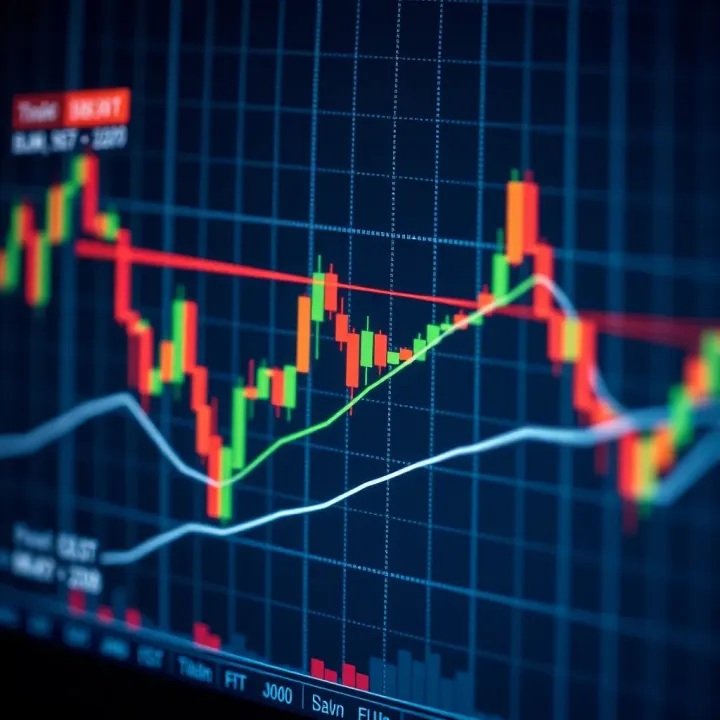
For example, if a stock on the Nairobi Securities Exchange (NSE) rises from KSh 100 to KSh 150, applying the 61.8% Fibonacci retracement level means you check for support around KSh 130.9, the level where price might halt or bounce. This practical approach helps avoid guesswork and supports evidence-based decision-making.
Remember, no tool is perfect on its own. Fibonacci retracement works best when combined with other technical indicators like moving averages, volume analysis, or candlestick patterns to confirm signals.
Calculating these levels is straightforward. First, identify a significant peak and trough in the price chart. Then subtract the low from the high to find the total price movement. Multiply this movement by the Fibonacci ratios, and subtract from the high (for an upward trend retracement) or add to the low (for a downward trend retracement).
In Kenya’s trading environment, understanding these levels is particularly useful because volatile markets can suddenly shift due to local economic news, election results, or changes in international commodity prices. Using Fibonacci retracements alongside familiar tools helps you cut through noise and make more informed trades.
By mastering Fibonacci retracement levels, traders gain an edge in anticipating where prices may reverse or consolidate, thus improving timing and risk management in their trading strategies.
Fibonacci retracement levels are horizontal lines drawn on price charts to identify potential zones where price movement may pause or reverse during a trend correction. These levels are built using ratios derived from the Fibonacci sequence — a unique series of numbers that generate natural proportionate relationships. Kenyan traders use these levels mainly to spot entry points, anticipate areas of support and resistance, and manage stop losses in stocks, forex, and commodities.
The Fibonacci sequence starts with 0 and 1, and each subsequent number is the sum of the two before it: 0, 1, 1, 2, 3, 5, 8, 13, and so on. This sequence isn’t just mathematical trivia; it has practical relevance because the ratios between these numbers tend to settle into consistent patterns. For instance, dividing a number in the sequence by the one before it (say 21 divided by 13) gives approximately 1.618, which is crucial in identifying retracement levels.
The number 1.618 is known as the Golden Ratio, and you can find it in nature — from the spirals of a sunflower’s seeds to the structure of a pine cone. What makes it interesting for traders is that financial markets often echo this natural balance. Prices tend to retrace by certain percentages related to the Golden Ratio, creating predictable zones of support or resistance. This similarity makes the Fibonacci retracement tool a favoured method for estimating where corrections may end.
When an asset's price moves sharply in one direction, it rarely continues in a straight line. Instead, it often pulls back or "retraces" before resuming the trend. Fibonacci retracement levels help traders predict these pullbacks by marking likely stopping points. For example, after Safaricom shares jump significantly, traders may watch the 38.2% or 61.8% retracement levels as possible zones where the price corrects but then bounces back.
The key retracement percentages derived from Fibonacci ratios are 23.6%, 38.2%, 50%, 61.8%, and sometimes 78.6%. Each represents how far a price may retreat from a recent high or low. While 50% is not a Fibonacci number, it is widely accepted due to market behaviour trends. Kenyan traders often observe how prices behave around these lines to decide when to buy or sell, making these levels a practical guide rather than an exact science.
Fibonacci retracement levels act like signposts during price pullbacks, giving Kenyan traders a clearer idea of when to enter or exit a position.
In summary, understanding what Fibonacci retracement levels are and where they come from equips you to use them wisely in your trading strategies, tailored to local market patterns. Whether you’re tracking the NSE (Nairobi Securities Exchange) or forex pairs, these levels give practical clues about potential price twists and turns.
Calculating and plotting Fibonacci retracement levels help traders pinpoint potential zones where prices may reverse or stall during a correction. This makes them a practical tool for timing entries, exits, or setting stop-loss orders. The key lies in accurately drawing these levels on price charts, which requires careful selection of points and the right software. These steps simplify a complex art into a clearly actionable process for traders, especially those dealing with Kenyan markets where precision avoids costly mistakes.
Start by identifying the swing high and swing low on the price chart. A swing high is the highest peak before prices start falling, while the swing low is the lowest trough before prices begin rising again. For example, on the Safaricom (SCOM) daily chart, find the highest candle before a downtrend and the lowest one before an uptrend. These points provide a frame, marking the range where retracement levels will be measured.
This selection is crucial because a wrong choice distorts the retracement percentages and thus misguides your trading decisions. In volatile markets like NSE or forex, it pays to double-check these swings over different timeframes, confirming that they represent meaningful price extremes rather than noise.

Once you have your swing highs and lows, most charting platforms allow you to plot Fibonacci retracement lines automatically by selecting these two points. The platform calculates key retracement levels—usually 23.6%, 38.2%, 50%, 61.8%, and sometimes 78.6%—and draws horizontal lines at these percentages within that range.
These lines become your visual guide for possible support or resistance. For example, if the price pulls back to the 61.8% level and starts bouncing, that may be a good buy signal. Drawing retracement lines reduces guesswork and adds a layer of objectivity, helping traders react to actual price behaviour rather than assumptions.
In Kenya, M-Pesa plays a vital role in facilitating easy and quick deposits for trading accounts. Many brokerages accept M-Pesa payments directly or through partners, enabling traders to transfer funds without going to a bank. To fund your account, you typically enter the broker’s paybill or till number on your M-Pesa menu, enter the amount, and confirm.
This seamless process is important given how fast markets move. Immediate funding can be the difference between catching a good trade or missing out. Besides M-Pesa, some platforms also accept bank transfers or combined payment solutions, but M-Pesa remains the most accessible for most traders across the country.
TradingView and MetaTrader 4 (MT4) are among the most popular platforms for plotting Fibonacci retracement levels in Kenya. TradingView is web-based, user-friendly, and offers interactive charts with lots of tools right in your browser or mobile phone. It suits traders who prefer visual clarity and easy access.
MT4, on the other hand, is widely used in forex and CFD trading. It has advanced charting, built-in Fibonacci tools, and supports automated trading strategies. Many Kenyan forex traders rely on MT4 because it connects seamlessly with most brokers and supports straightforward plotting of retracement lines.
Both tools save time and improve accuracy when calculating Fibonacci retracement levels, allowing you to focus on strategy rather than manual calculations.
Accurate plotting of Fibonacci retracement levels requires both proper point selection and reliable charting tools. Together, they turn analysis into a practical edge for the Kenyan trader navigating volatile markets.
Fibonacci retracement levels are key in spotting potential points where prices might pause or reverse. For Kenyan traders, understanding how to use these levels properly helps in making clearer decisions when to enter or exit trades. Recognising these levels can reveal strong support or resistance zones in a stock, forex pair, or commodity.
The most watched Fibonacci retracement levels are 38.2%, 50%, and 61.8%. These percentages represent how far a price retraces from a previous move before possibly continuing in the original direction. For example, if Safaricom shares rise from KSh 30 to KSh 45, a retracement to about KSh 38 (which is roughly 38.2% back) might signal support where buyers step in.
These retracement levels act like invisible lines where buying or selling pressure often builds, helping traders identify zones to place stop-loss or take-profit orders.
In practice, Nairobi Securities Exchange (NSE) stocks often show price reactions near these retracement levels after sharp price swings. Similarly, in forex markets involving the Kenyan shilling, such as USD/KES or EUR/KES, these levels help traders anticipate pullbacks during trending moves. For instance, if USD/KES rises sharply, the 50% retracement could be a good zone to watch for price to bounce back upwards.
Traders often use moving averages alongside Fibonacci levels to improve confidence in trades. A 20-day or 50-day moving average near a Fibonacci level may reinforce that the area is a strong support or resistance. For instance, if the 61.8% retracement level coincides with the 50-day moving average on an NSE stock chart, this double confirmation becomes a stronger signal.
The RSI indicator shows whether an asset is overbought or oversold. When RSI reaches below 30 near a Fibonacci retracement zone, it signals a possible buying opportunity. Conversely, RSI above 70 near a Fibonacci resistance level could suggest a good time to sell or tighten stops. Combining these indicators helps Kenyan traders avoid false signals by checking momentum alongside price levels.
Volume can confirm the strength of retracement levels. When price approaches a Fibonacci support or resistance with increasing volume, it suggests strong interest at that level. For example, if NSE stock falls to the 38.2% retracement and trading volume spikes, it may indicate buyers coming in. Volume drying up instead could warn of a weak bounce, suggesting caution.
Overall, using Fibonacci retracement alongside moving averages, RSI, and volume gives traders more tools to frame their decisions better. This multi-layered approach supports clearer entry and exit points while managing risk effectively in Kenyan trading environments.
While Fibonacci retracement levels are popular among traders, they come with several challenges that you should be aware of. Understanding these limitations is key to using them effectively, especially in volatile markets like Kenya's stock and forex scenes.
Prices in the Nairobi Securities Exchange (NSE) or forex markets can swing wildly on daily news, political developments, or unexpected economic data. This volatility creates 'noise'—random price movements that do not reflect the underlying trend. Such noise can cause the price to breach Fibonacci levels momentarily, giving false signals about potential reversals or continuations. For instance, Safaricom shares might briefly dip below a 61.8% retracement level due to short-term profit-taking, misleading traders into thinking a larger trend reversal is underway.
To avoid acting on false signals, it’s crucial to seek confirmations alongside Fibonacci levels. Confirmation comes from observing price action, candlestick patterns, or other indicators such as volume spikes. For example, a retracement level near 50% gains strength if followed by a bullish engulfing candle with higher-than-average volume, signaling genuine support. Without such confirmation, relying solely on Fibonacci levels can lead to premature entries or exits, which could hurt your trading results.
Fibonacci retracement focuses solely on price history but does not account for the broader economic or company fundamentals. Kenyan traders who rely only on Fibonacci risk missing key market drivers such as changes in Central Bank of Kenya (CBK) monetary policy or corporate earnings reports. For example, during a period of high inflation, prices might continue falling despite hitting classic retracement zones because traders anticipate tighter monetary policy. Blending technical signals with an understanding of such fundamentals provides a more rounded perspective.
Relying exclusively on Fibonacci levels may limit your insight into market behaviour. Combining them with other technical tools like moving averages, the Relative Strength Index (RSI), or trendlines offers a richer analysis. In practice, if price approaches a 38.2% Fibonacci retracement while RSI indicates oversold conditions and the 50-day moving average offers support, the probability of a bounce increases. Kenyan traders using platforms like TradingView or MetaTrader 4 (MT4) should always verify Fibonacci signals with other indicators to reduce risks caused by random price swings.
Fibonacci retracement levels are helpful but not foolproof. Their real power lies in how you combine them with confirmations and other tools to make better trading choices.
In summary, being aware of false signals and avoiding over-dependence on Fibonacci retracement sets you up for smarter trading in Kenya’s dynamic markets. Approach these tools with caution and complement them with broader analysis for best results.
Using Fibonacci retracement levels effectively requires practical adjustments, especially for Kenyan traders juggling local market idiosyncrasies. This section offers tips to refine your approach by understanding how Fibonacci works within Kenyan stock and forex markets, alongside smart risk management.
Kenyan markets often show unique patterns influenced by regional events such as political developments, agricultural cycles, and earnings reports of blue-chip companies like Safaricom. Retracement levels may not always hold firmly during earnings season or amidst shifts in government policies. Local traders should therefore pay attention to volume spikes that accompany retracement touches, confirming a genuine support or resistance point rather than a fleeting dip.
For instance, fluctuations in NSE (Nairobi Securities Exchange) tend to be sharper during certain quarters due to dividend payments, which can cause price swings that affect Fibonacci levels. Understanding these local rhythms helps in interpreting retracement zones more accurately rather than blindly trusting standard percentages.
Take Safaricom, one of the most traded shares on NSE, as a prime example. When Safaricom's price retraced to the 38.2% Fibonacci level after a solid rally, many local traders noticed that the level held due to strong buying interest from institutional investors. Conversely, NSE 20 index movements sometimes see retracements that only briefly touch the 50% line before rebounding or falling beyond, especially during volatile sessions following macroeconomic announcements.
This case highlights the need to combine Fibonacci levels with market context. Kenyan traders often monitor local news closely and watch out for momentum indicators before acting on retracement signals.
Applying Fibonacci retracement levels for risk management can protect your capital effectively. A common approach is placing stop-loss orders slightly beyond the next Fibonacci retracement line beyond your entry point. This buffers you against minor market noise but avoids premature exit during retracements.
For example, if you enter a buy position near the 50% retracement level, set your stop-loss just below the 61.8% retracement point. This method helps manage downside without closing your trade too early, especially important in less liquid Kenyan stocks or forex pairs prone to sudden spikes.
Take-profit targets can also align with Fibonacci extensions—levels projected beyond the previous swing high or low. Setting exit points around these levels offers a disciplined way to lock gains instead of chasing the market indefinitely.
In practical Kenyan trading scenarios, combining retracement-based exits with trailing stops can capture profits while allowing room for surprises. For example, in forex trading of the USD/KES pair, a trader might take partial profits near the 161.8% extension after a strong upward retracement bounce, while keeping a trailing stop based on shorter Fibonacci levels.
Using Fibonacci retracement for both entry and exit points can turn guesswork into strategy. Kenyan traders who adapt these levels to their market conditions and pair them with strong risk tools tend to improve consistency.
With these practical applications in mind, Fibonacci retracement becomes more than just lines on a chart—it turns into a useful aid for navigating the dynamic Kenyan trading scene with more confidence.
Explore the essentials of derivative trading in Kenya 📈. Learn types, benefits, risks, key strategies, and local regulations to make informed investment decisions.
📈 Curious about CFD trading in Kenya? Learn how CFDs work, key strategies, risks, and regulatory tips to trade smart and protect your investments.

🤖 Explore bots on Deriv.com: how they work, pros & cons, legal tips, plus user advice and support for safer automated trading experiences.
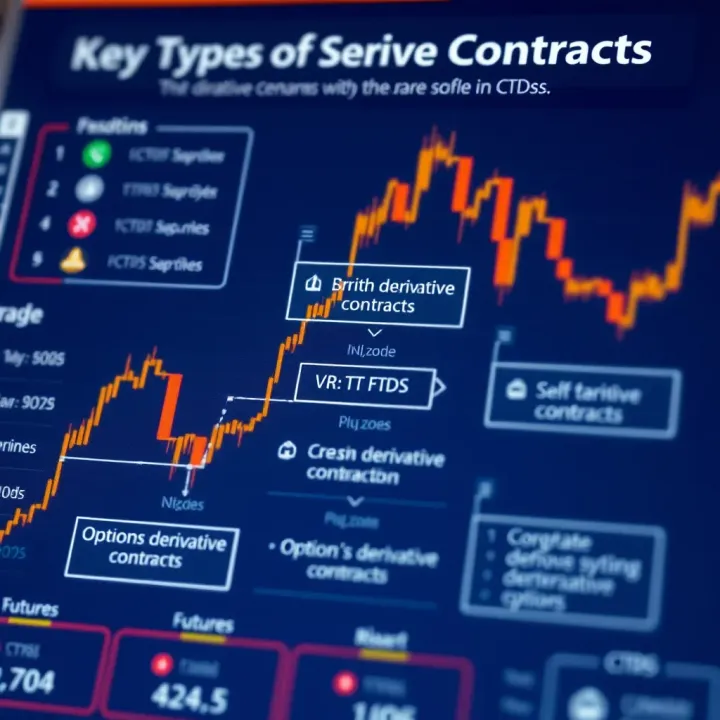
Explore Deriv trading in Kenya 📊: Learn how derivatives work, key types, trading platforms, risks, and smart strategies to trade confidently and safely.
Based on 13 reviews