
Asian Trading Session Hours in Kenyan Time
Learn how the Asian trading session fits into Kenyan time 🕒, key players in this period, and its impact on forex markets 🌏 for Kenyan traders.
Edited By
Jonathan Reed
The New York forex trading session is one of the most active times in the global forex market. Running from 3 pm to 12 am East Africa Time (EAT), this session coincides with the working hours of major US financial centres. It is here that significant trading volumes and volatility typically occur, making it an important period for forex traders around the world, including those in Kenya.
The New York session often overlaps with the London session between 3 pm and 5 pm EAT. This overlap is particularly noteworthy because it creates opportunities for increased market activity, tighter spreads, and more liquidity. Kenyan traders who understand this timing can better plan their trades to benefit from these dynamics.
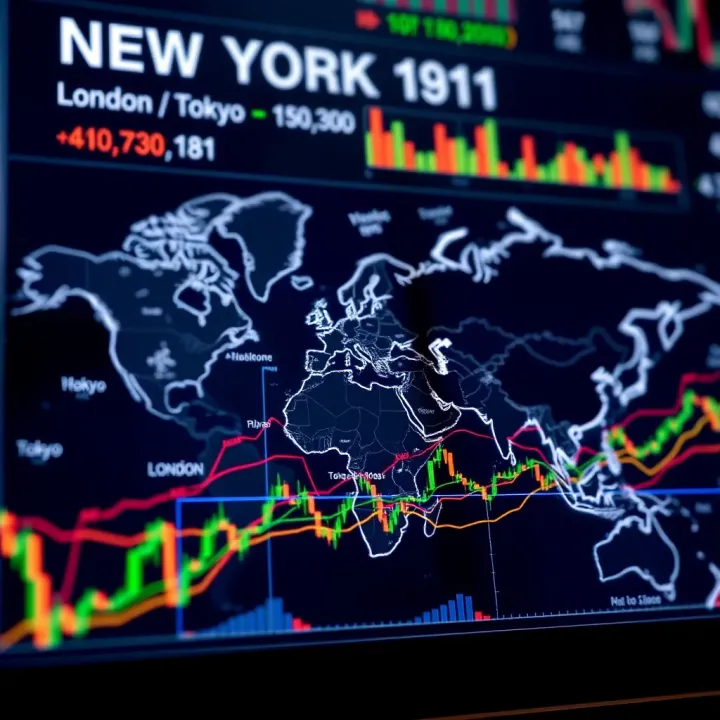
Unlike the quieter Sydney or Tokyo sessions, New York's market is heavily influenced by economic news releases from the United States. Events like the Federal Reserve interest rate announcements, non-farm payrolls, and inflation reports can cause rapid price movements. Traders who keep an eye on the US economic calendar can anticipate moments of high volatility and prepare their strategies accordingly.
For Kenyan traders, managing trading sessions also means aligning trading hours with their own schedules. Since New York trading starts mid-afternoon in Kenya, it fits well with post-work trading or for those who have flexible hours during the day. It’s wise to avoid trading during low activity hours in the early New York session or late at night when liquidity diminishes.
The New York forex session offers a unique blend of volatility and liquidity driven by US market influence, making it essential for serious traders to understand its timing and characteristics.
The New York forex session runs from 3 pm to 12 am East Africa Time (EAT).
Overlaps with the London session between 3 pm and 5 pm EAT, increasing trading opportunities.
US economic news releases often impact market volatility during this period.
Kenyan traders can take advantage of session timing to fit trading around daily routines.
Understanding these basics will help traders optimise their strategies for the New York session and better manage risks in a dynamic market environment.
The New York forex trading session is a major pillar of the global currency market. For anyone serious about forex trading, especially from Kenya, understanding this session helps in timing trades better and managing risk effectively. Nairobi is eight hours ahead of New York in standard time, so knowing when the New York market is active can guide when to be alert for price movements.
The New York session officially starts at 8:00 am and closes by 5:00 pm Eastern Standard Time (EST). This period aligns with working hours in the United States, home to one of the largest financial markets globally. The session is marked by heavy trading volumes, partly because the New York Stock Exchange and other important financial institutions operate during these hours. On a practical note, the session overlaps with the London trading hours for about four hours, increasing market liquidity and volatility.
Unlike the quieter Asian session, the New York session sees active participation from institutional investors, hedge funds, forex brokers, and multinational corporations. For example, currency pairs involving the US dollar, such as USD/KES or EUR/USD, tend to show sharper price swings during this time. Traders rely on this session to react to US economic reports, corporate earnings, and Federal Reserve announcements released during these hours.
The New York session is vital because it helps set the tone for currency trends worldwide. Since the US dollar dominates global trade and reserves, movements in New York often ripple through other markets. Kenyan traders and businesses dealing in imports or exports keep a close eye on this session because it can affect exchange rates they deal with daily.
Major economic reports such as the US Non-Farm Payrolls (NFP) or Consumer Price Index (CPI) come out during the New York session, often causing spikes in volatility. For instance, a stronger-than-expected NFP typically strengthens the US dollar, impacting currency pairs with the shilling. This information guides investors on when to enter or exit trades.
The New York session's combination of high liquidity and quick news flow makes it one of the best times to capture meaningful price moves, particularly if you are trading USD pairs.
In summary, the New York session offers an active trading period with plenty of opportunities. Understanding its timing and characteristics helps Kenyan traders align their trading strategies with global market rhythms, improving chances of success.
Knowing the exact trading hours of the New York forex session matters because this session influences global currency movements due to the volume of trades happening in this period. Forex traders, especially those based in Kenya, need to be clear about these hours to plan their trading activities effectively, avoid unnecessary risk, and catch opportunities when the market is most liquid and volatile.
The New York forex session officially opens at 8:00 am and closes at 5:00 pm Eastern Time (ET). For Kenyan traders, who operate on East Africa Time (EAT), which is usually 8 hours ahead of ET, this means the session runs from 4:00 pm to 1:00 am the next day in Kenyan local time.
For example, if a trader in Nairobi wants to catch the first hour of the New York session, they need to be ready by 4:00 pm EAT. This timing allows them to react to early market movements in New York and take advantage of the overlapping period with London, which can bring high volatility.
Being clear on this conversion helps avoid missed trades or entering the market during quiet hours with low liquidity, which often results in wider spreads and less predictable price action.
Daylight Saving Time (DST) in the United States affects the New York forex session hours twice a year. When DST is in effect (typically March to November), the clocks move one hour forward, meaning New York session hours shift to 3:00 pm to 12:00 am Kenyan time. Outside DST (November to March), the hours revert to 4:00 pm to 1:00 am EAT.
This change can cause some confusion, especially for Kenyan traders unaware of DST adjustments. Missing this shift may lead to submitting trades too early or late, and losing advantage over high market activity.
For instance, during DST, a trader expecting the market to open at 4:00 pm EAT would be half an hour late if they did not adjust, potentially missing the first wave of liquidity and volatility.
Traders should mark their calendars for these periods and adjust their trading schedules accordingly. Many trading platforms also automatically reflect DST changes, but confirming this manually avoids surprises.
Understanding these exact trading hours and their variations ensures Kenyan traders can position themselves optimally to exploit the New York forex session's market moves.
The New York forex session does not operate in isolation; it overlaps and interacts with other major forex trading sessions globally. Understanding these interactions is valuable because forex markets are influenced heavily by periods of overlap when liquidity and volatility tend to peak. For traders, especially those in Kenya, recognising how the New York session ties in with sessions in London and Asia can enhance timing strategies and improve decision-making.
The New York session overlaps with the London session for about four hours every trading day, roughly from 3 pm to 7 pm East Africa Time (EAT). This overlap is the busiest period in global forex markets, as traders from two of the biggest financial centres participate simultaneously. The increased number of participants typically leads to higher liquidity and tighter spreads, making it an ideal window for active trading.
For example, during this overlap, currency pairs like the EUR/USD, GBP/USD, and USD/CHF often experience increased price movement and volume. Kenyan traders can take advantage of this by planning trades around this period, knowing price swings can be sharper and stop-loss orders tighter. This overlap also coincides with many significant economic releases from both Europe and the US, which can further fuel market activity.
In contrast, the Asian session, which runs roughly from 3 am to 12 noon EAT, tends to be quieter, with lower volatility and volume. The New York session starts after the Asian market closes, meaning there is little to no overlap, except for minimal activity towards the very end of the Asian session. Consequently, pairs involving Asian currencies like the USD/JPY or AUD/USD see reduced movement during the New York session compared to the London-New York overlap.
That said, the Asian session sets the stage for the New York trade as it often establishes the overnight sentiment. For instance, if the Bank of Japan announces a policy change in the Asian session, its effects may carry over into New York’s trading hours, affecting USD/JPY. Nonetheless, actual liquidity and trading volumes add momentum mostly once New York opens.
Traders prosper by focusing on when market sessions overlap, especially between London and New York, because this period combines high volume and volatility for better trade setups.
In summary, the New York session interacts most actively with the London session, creating favourable conditions for traders. Understanding the quieter Asian session’s mood helps anticipate market trends but the real action from New York’s opening promises the best trading opportunities. Kenyan traders should therefore align their strategies with these active overlaps to fine-tune entry and exit points.
Understanding what drives market movements during the New York forex session is essential for anyone wanting to trade effectively. This session sees some of the highest volumes and volatility, making it a prime time for price swings. Two main factors stand out here: the release of economic data and the trends in market liquidity and volatility.
Economic indicators published during the New York session can shake up the forex market significantly. Reports like the US Non-Farm Payrolls (NFP), Consumer Price Index (CPI), and Federal Reserve interest rate decisions are closely monitored. These releases often cause sharp price movements, especially in major currency pairs like USD/KES, EUR/USD, and USD/GBP.
For example, a stronger-than-expected NFP report typically boosts the US dollar as it signals a healthier economy. Traders in Kenya who follow these announcements closely can position themselves to take advantage of the momentum. However, the flipside is a risk of sudden price jumps, so having a clear strategy for entering and exiting trades during news time is critical.
Moreover, the timing of these releases usually occurs in the morning in New York, which corresponds to the late afternoon or early evening in Kenya. This alignment allows Kenyan traders to be alert during prime market-moving news, rather than trading blindly.
"Economic data acts like the heartbeat of the New York forex session—watch it closely to catch the market’s pulse."
Liquidity and volatility during the New York session tend to be higher than many other periods. This is partly because New York is a major financial hub, with large banks, hedge funds, and institutional investors actively trading. As London’s trading hours overlap with New York in the morning, liquidity peaks, leading to tighter spreads and more trading opportunities.
Volatility, on the other hand, can vary but generally spikes around market openings and major economic events. For instance, just after the New York open and during major US economic announcements, price swings are usually wider, presenting both chances for profit and risks.
Kenyan traders should note that while increased volatility can be profitable, it also demands effective risk management. Using stop-loss orders and limiting trade sizes helps protect against sudden adverse moves. Plus, it's wise to monitor global developments like geopolitical tensions or unexpected events that can amplify volatility beyond the usual patterns.
In summary, focusing on economic data releases and understanding liquidity and volatility trends gives traders in Kenya a solid foundation to navigate the New York forex session with confidence and clear strategy.
Trading the New York forex session from Kenya comes with unique challenges and opportunities. It is crucial to understand the session’s timing relative to Kenyan time and the factors that influence market movements during this period. Practical tips help Kenyan traders capitalise on liquidity, volatility, and economic events while managing risks effectively. By tailoring strategies to this session, traders can improve their chances of success in a market that operates far from home.
The New York forex session runs roughly from 2:00 pm to 11:00 pm Kenyan time, depending on daylight saving shifts in the US. The most active period is during the overlap with the London session, which lasts from 2:00 pm to about 5:00 pm Kenyan time. This window shows increased trading volumes and price movements because both major financial hubs are open. Kenyan traders often find this timeframe best for scalping or day trading pairs like USD/KES, EUR/USD, and GBP/USD.
Trading late in the evening, after 8:00 pm Kenyan time, tends to cool down as New York markets prepare to close. However, some traders monitor news releases or position adjustments during the last trading hours. Since this session matches the Kenyan afternoon and evening, it is advisable to have a trading plan that fits your daily routine — for example, setting alerts for key economic data releases at 3:30 pm or 8:30 pm Kenyan time.
Risk management is vital, especially when trading from Kenya in a foreign market environment. The New York session can be volatile, largely driven by US economic reports such as the Non-Farm Payrolls, Federal Reserve announcements, or retail sales data. Kenyan traders should monitor credible news sources and economic calendars that use Kenyan time to avoid surprises.
Setting stop-loss orders and limiting trade sizes can help mitigate rapid price swings. For instance, if you expect volatility around the US Federal Reserve rate decision at 9:00 pm Kenyan time, consider reducing your exposure beforehand. Also, avoid trading during illiquid hours to minimise risk.
Staying updated with reliable news and combining technical analysis with fundamental insight creates a balanced approach. Kenyan traders benefit greatly from apps or platforms that provide real-time market alerts timed to Kenyan Standard Time (EAT).
To sum up, trading the New York forex session from Kenya demands awareness of session hours, aligning those with your lifestyle, and managing risks with disciplined strategies. Keeping a close watch on news and market rhythms during the busiest trading hours improves decision-making and can boost trading success.
Learn how the Asian trading session fits into Kenyan time 🕒, key players in this period, and its impact on forex markets 🌏 for Kenyan traders.

📈 Understand the Asian Forex trading session timing in Kenya 🇰🇪 and learn key market tips to optimize your trades during these hours for better results.
Explore Deriv forex trading 🇰🇪 with this detailed guide: platform features, forex instruments, strategies, and smart risk management tips for Kenyan traders.
📈 Master forex trading in Kenya with the Deriv Pip Calculator. Learn to calculate pip values precisely and manage your trades like a pro.💡
Based on 14 reviews