

Asian Forex Trading Session Hours for Kenyan Traders
📈 Understand the Asian Forex trading session timing in Kenya 🇰🇪 and learn key market tips to optimize your trades during these hours for better results.
Edited By
Isabella Mitchell
The New York forex session is a vital part of the daily currency trading cycle. For Kenyan traders, understanding exactly when this session happens in local time is key to catching the market’s most active moments.
The New York session officially runs from 8:00 am to 5:00 pm Eastern Time (ET). Kenya operates on East Africa Time (EAT), which is usually eight hours ahead of ET. That means the New York session opens at 4:00 pm and closes at 1:00 am Kenyan time. This schedule shifts by an hour during daylight saving time in the US, which runs from the second Sunday in March to the first Sunday in November, narrowing the time difference to seven hours.
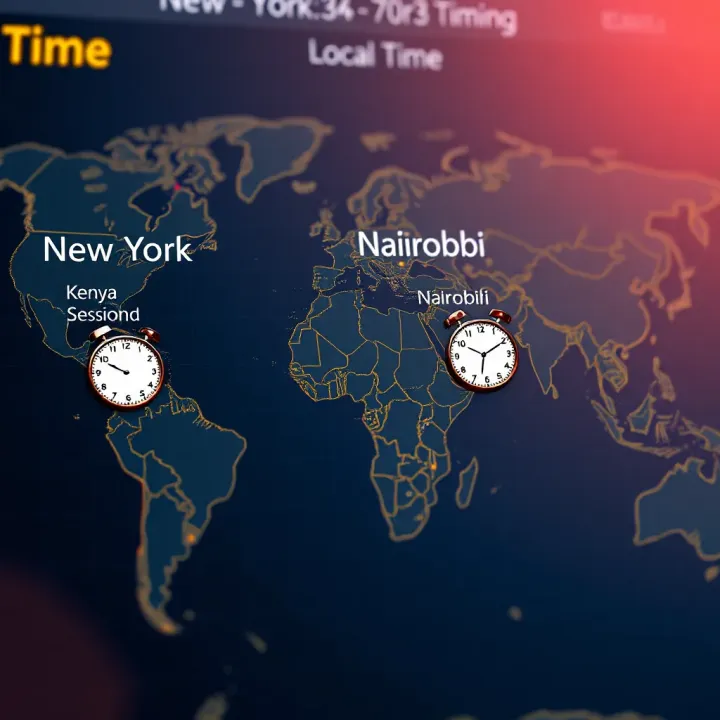
Why does the New York session matter? It’s the second largest forex session after London and overlaps with the London session between 4:00 pm and 5:00 pm EAT. This overlap creates high market volatility and liquidity. Kenyan traders can find good trading opportunities in major currency pairs like USD/KES, EUR/USD, and GBP/USD during this window.
Knowing when the New York session starts and ends in Kenya allows traders to plan their day efficiently and spot the busiest market hours for better price movements.
For practical applications:
Adjust your trading schedule: Kenyans trading forex on platforms like MetaTrader should set alerts aligned with New York session hours to avoid missing rapid price changes.
Focus on news releases: Key US economic data, released during this session, often causes significant price swings—monitoring these can improve trade timing.
Manage risk with volatility: Since volatility peaks during overlaps, consider tighter stop-loss orders or smaller trade volumes to protect capital.
Understanding these trading hours helps Kenyan investors avoid trading during slow periods and capitalise on moments of high activity. It’s a straightforward adjustment but one that can make a real difference in trading outcomes.
The New York forex trading session plays a significant role in the global currency markets, especially for traders based in Kenya. Understanding its hours and characteristics can greatly improve trading decisions, especially since it is one of the most active sessions that overlap with others, offering useful opportunities for profit and liquidity.
The New York session officially runs from 8:00 am to 5:00 pm Eastern Time (ET). For Kenyan traders, this translates to 3:00 pm to 12:00 midnight East Africa Time (EAT), though this shifts slightly during daylight saving time changes in the US. This session kicks off after the London session and often overlaps with it for a few hours, increasing market activity.
This session’s defining feature is the heavy participation of major US financial institutions, hedge funds, and central banks. Because the US dollar is the world’s primary reserve currency, many currency pairs involving the dollar see sharp movements during this window. For example, pairs like USD/KES, EUR/USD, and USD/JPY typically experience heightened volatility.
The New York forex session is crucial due to its volume and impact on daily price swings. It often sets the tone for the following trading day as the U.S. market responds to news releases, economic data, and geopolitical events.
Liquidity peaks during this session as American financial centres become active, making it easier to enter and exit trades with tighter spreads. For Kenyan traders, this means better pricing and opportunity to capitalise on market swings caused by US Federal Reserve announcements or jobs data like the Non-Farm Payroll report.
Moreover, the overlap with the London session often results in the most volatile period of the day, providing ample chances for both day traders and swing traders to find opportunities. Kenyan traders can prepare their strategies to exploit this window, considering that volatility tends to settle after New York closes.
Traders in Kenya should keep a close watch on this session to tap into periods of high liquidity and well-defined market movements, especially when key economic data from the US is released.
By appreciating these characteristics, Kenyan forex traders can plan their activities more efficiently, ensuring they act during periods of maximum opportunity and lower transaction costs.
For Kenyan traders, understanding the New York Forex session hours in their local time is absolutely vital. Forex markets operate 24/5, but liquidity and volatility differ depending on the trading session. If you miss the timing for New York, you might lose out on some of the sharpest price moves or the best opportunities for profit.
Kenya is in the East Africa Time zone (EAT), which is UTC+3. New York runs on Eastern Time, which shifts between UTC-5 (Eastern Standard Time) and UTC-4 (Eastern Daylight Time) depending on the time of year due to daylight saving. This means the typical time difference ranges:
During Standard Time (early November to mid-March): Kenya is 8 hours ahead of New York.
During Daylight Saving Time (mid-March to early November): Kenya is 7 hours ahead.
For example, when it is 9 am in New York (standard time), it will be 5 pm in Nairobi.
The official New York Forex trading session opens at 8 am and closes at 5 pm New York local time. Converted to Kenyan time:
During Standard Time:
Opens at 4 pm EAT
Closes at 1 am EAT (next day)
During Daylight Saving Time:
Opens at 3 pm EAT
Closes at 12 am midnight EAT (next day)
This schedule means Kenyan traders will mostly be active in the late afternoon, evening, and sometimes into the early hours of the next day. It’s common for many to plan trades after work or during quieter periods at home.
Daylight Saving Time (DST) starts in New York around the second Sunday of March and ends in early November. Kenya does not observe DST, so the time gap between New York and Kenya shifts by one hour twice a year. Kenyan traders need to adjust their trading plans accordingly:
Before DST begins: The New York session opens at 4 pm Kenya time.
During DST: It opens an hour earlier at 3 pm Kenya time.
After DST ends: Trading shifts back to the 4 pm start.
Keep a close eye on the calendar to avoid missing the session opening by an hour! Changing alarms and routine around these shifts can help you stay in sync.
Using a dedicated forex market clock or a searchable world clock app can help track these changes. Setting reminders a week before DST changes avoid surprises and ensure you don’t miss crucial trading hours.
In summary, converting New York Forex session times to Kenyan local time is essential for planning your trades effectively. Knowing the exact hours lets you engage when liquidity is high, avoiding needless guesswork and improving your chances of profitable trades.
Kenyan traders benefit from focusing on the New York forex session because it is one of the most active and liquid periods in the global forex market. This session often sets the tone for price movements, especially in major currency pairs involving the US dollar. For traders in Kenya, understanding when the New York market is open helps avoid missing prime trading opportunities.
The New York session is known for its high market liquidity and volatility, making it a hotspot for traders looking to capitalise on price swings. Liquidity refers to the ease with which traders can buy or sell currencies without causing drastic price changes. When New York opens, banks, hedge funds, and large institutions execute significant trades, pushing volumes up dramatically.
For example, the USD/KES pair may experience stronger movements during this time as American and Kenyan financial activities intersect. Such volatility provides Kenyan traders more opportunities to enter and exit trades at favourable prices rather than facing stagnant periods with little price action. However, this volatility also means risks increase, demanding disciplined risk management.
Higher liquidity reduces spread costs, which can save Kenyan traders on transaction fees, especially when trading frequently during this session.
The New York session overlaps partially with the London session, which is traditionally the largest forex market globally. This overlap period creates a burst of trading activity, further improving liquidity and enhancing price movements. For Kenyan traders, this overlap usually occurs in the late afternoon to early evening local time, making it a convenient window to trade without disrupting daily routines.
The overlap means that pairs involving the US dollar, British pound, and euro often see sharp moves. For instance, EUR/USD, GBP/USD, and USD/JPY pairs usually react strongly during these hours, offering good trading setups. Because Kenyan traders operate in East Africa Time (EAT), this overlap aligns well with evening trading hours, making it easier to monitor the market actively.
In contrast, the New York session’s sole active hours outside of this overlap can be less dynamic, so concentrating trading efforts when these sessions intersect can improve success rates.
Ultimately, knowing why to focus on the New York forex session allows Kenyan traders to plan trades strategically, manage their time efficiently, and tap into the times when market moves are sharpest and most predictable.
Trading during the New York forex session offers Kenyan traders unique opportunities due to its high liquidity and volatility. Understanding the practical aspects of trading in this session can help you maximise profits while managing risks. This guide covers the best hours to trade, currency pairs to focus on, and risk management strategies suited to Kenya’s time zone and market behaviour.
The New York session officially runs from 3:00 pm to 12:00 am East Africa Time (EAT). However, the most active and potentially profitable hours are typically from 4:00 pm to 9:00 pm EAT. This period overlaps with the London session until around 5:00 pm EAT, creating heightened market moves due to increased trading volume. For example, if you trade between 4:00 and 6:00 pm, you capture the market when major banks and financial institutions are most active.
Late evening hours can also offer good opportunities, especially for traders focusing on North American economic data releases which often occur between 8:30 pm and 10:00 pm EAT. Kenyan traders should also watch out for volatility spikes around the open and close of the session, as these periods often bring strong price swings.
During the New York session, currency pairs involving the US dollar see the most action. Popular pairs among Kenyan traders include:
EUR/USD: The most traded forex pair globally. It experiences significant movement during New York hours thanks to European and American market overlap.
USD/JPY: Often active during the New York session since Japan's market prepares for London and New York activities.
GBP/USD: Also benefits from the London-New York overlap, offering good volatility for intraday traders.
USD/CAD: Moves with North American economic news, relevant especially during Canadian business hours that partially overlap.
Because these pairs usually have tight spreads and high liquidity, Kenyan traders can enter and exit positions more efficiently.
Managing risk is vital when trading during such a volatile session. Kenyan traders should:
Set stop-loss orders to automatically limit potential losses, especially during unpredictable news releases.
Avoid overleveraging. Using high leverage can amplify losses quickly; a cautious approach with leverage under 10:1 is wise.
Monitor economic calendars for US and Canadian data releases affecting currency pairs and adjust positions accordingly.
Trade smaller position sizes during off-peak hours to reduce exposure when liquidity dips.
Keep in mind, the New York session can bring rapid price changes. Protect your capital with clear plans for entry, exit, and risk level before trading.
By knowing when to trade, which pairs to select, and how to manage risks, Kenyan traders can take full advantage of the New York forex session while safeguarding their investments.
Staying updated on the New York forex session timing is vital for Kenyan traders aiming to trade efficiently and avoid missing key market movements. With the time difference and daylight saving changes, relying on precise tools and resources helps reduce guesswork and sharpens decision-making.
Forex market clocks and timers are simple yet effective tools designed to track the opening and closing hours of major trading sessions, including New York. Many websites and trading platforms provide clear clocks that display time in various zones, including Kenyan local time. For a trader in Nairobi, having access to a forex market clock that automatically adjusts for daylight saving makes it easy to know when the New York session starts and ends without manual conversion errors.
For example, a forex market clock on a well-known trading platform or a dedicated app like Forex Factory’s market clock will highlight session overlaps and alert traders to windows of increased volatility. This helps Kenyan traders plan their trading day better, focusing on the most liquid and active hours.
Mobile trading is widespread in Kenya thanks to affordable smartphones and reliable internet. Several apps cater specifically to forex traders, combining live trading data with session timing alerts.
MetaTrader 4 and MetaTrader 5 remain top choices among Kenyan forex traders. These platforms display server time (usually GMT or broker local time) but allow traders to customise indicators that mark New York session hours. Meanwhile, apps like Investing.com and DailyFX offer session timers plus news feeds targeted at forex markets, helping traders combine timing with fundamental data.
On top of that, for quick checks, traders can turn to local platforms such as KCB M-Pesa FX services or even general time apps that include world clock functionalities. These let traders sync their phones to Kenyan time and mark New York session timings without juggling multiple conversions.
Using accurate tools and apps is not just about knowing the time — it’s about aligning your trading plan with the market rhythm. Just like one wouldn’t start a taxi fare without knowing the distance, a trader shouldn’t act without proper timing awareness.
In summary, Kenyan forex traders should make a habit of leveraging forex market clocks, timers, and reliable mobile platforms incorporating session data. This focus on precise timing reduces errors and enhances readiness for the volatility and liquidity the New York session offers.
📈 Understand the Asian Forex trading session timing in Kenya 🇰🇪 and learn key market tips to optimize your trades during these hours for better results.
Explore Deriv forex trading 🇰🇪 with this detailed guide: platform features, forex instruments, strategies, and smart risk management tips for Kenyan traders.
Explore top forex brokers in Kenya with low minimum deposits 💰 Find trusted platforms, regulation tips, and smart strategies to trade safely and start confidently 📈
📈 Master forex trading in Kenya with the Deriv Pip Calculator. Learn to calculate pip values precisely and manage your trades like a pro.💡
Based on 13 reviews