

Understanding Forex Trading in Kenya: A Practical Guide
💱 Learn forex trading basics, broker tips, regulation, and fund management tailored for Kenyan traders. Navigate currency markets confidently and safely with practical insights.
Edited By
Sophia Green
Forex trading can be a tough game, especially for traders in Kenya where market conditions might differ from global trends. Understanding which strategies work locally is key to making consistent profits. This section introduces essential concepts and practical methods tailored to Kenyan forex traders.
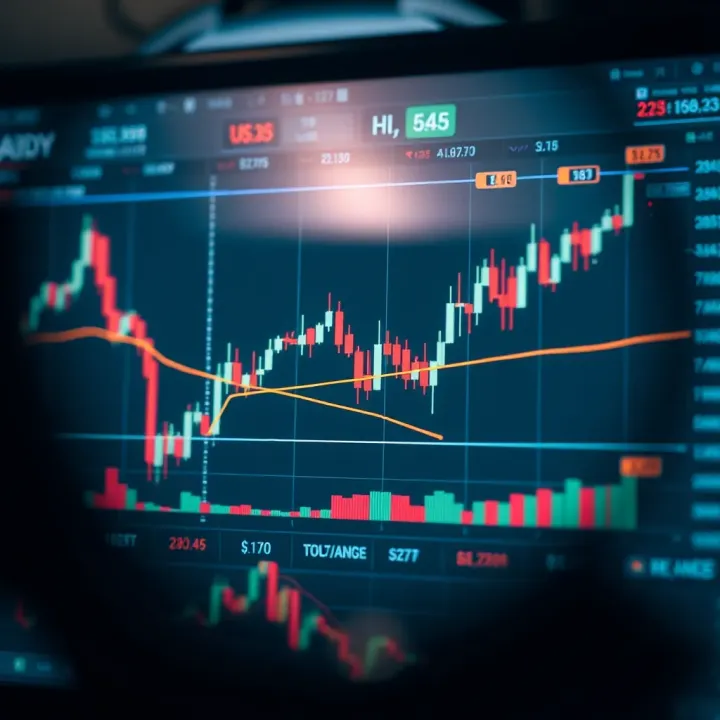
Forex trading involves buying and selling currency pairs, aiming to profit from changes in exchange rates. For example, trading USD/KES (US dollar to Kenyan shilling) means speculating whether the shilling will strengthen or weaken against the dollar. Efficient strategies harness local economic indicators such as CBK policies, import-export balances, and regional political events.
Before hopping into technical details, Kenyan traders should focus on these basics:
Timeframes: Choose the trading timeframe that suits your schedule; day trading demands constant attention, while swing trading suits those balancing other work commitments.
Risk Management: Limit your exposure per trade, often recommended at 1-2% of your trading capital. Use stop-loss orders to prevent heavy losses, a must in volatile markets like forex.
Broker Selection: Opt for brokers licensed by CMA Kenya for safer trades and KSh deposits/withdrawals accessible through M-Pesa or bank channels.
Trend Following: When USD/KES shows a steady rise over days, follow the momentum rather than betting on reversals. It’s like catching a matatu when it’s on its route, not when it’s at the stop.
Range Trading: In some periods, the shilling might oscillate between certain levels. Buying near the support level and selling at resistance can work well.
Breakout Trading: Watch for significant news like CBK's monetary policy announcements. When the market breaks past a resistance or support, that's your cue to enter.
Consistency and patience trump quick wins. Kenyan traders who combine solid strategy with discipline tend to avoid the common pitfalls of emotional trading.
Many Kenyan traders benefit from downloadable PDFs that dig into technical analysis, economic calendars, and currency behaviour guides. Such documents offer step-by-step frameworks and real-trade case studies to build confidence before placing live trades.
Traders should look for PDFs from trusted sources like the CMA, Central Bank of Kenya (CBK), or reputable forex education websites. These resources also help keep up with changes in policies affecting KES performance.
Mastering forex trading requires more than guesswork. With local strategies and credible PDFs in hand, Kenyan traders can build a solid foundation to grow their trading skills and profits steadily.
Grasping the basics of forex trading is essential for anyone aiming to succeed in this market. Without understanding how currency values move and what factors influence them, traders risk making decisions based on guesswork rather than solid information. For Kenyan traders, knowing the foundations also helps tailor strategies that fit local economic conditions, like the impact of CBK monetary policy on the Kenyan shilling.
Forex trading means buying one currency while simultaneously selling another. These trades happen in pairs — for example, the US Dollar and the Kenyan Shilling (USD/KES). The goal is to profit from changes in exchange rates between these currencies. It’s a market open nearly 24 hours a day, allowing traders worldwide to act on economic news, interest rate changes, or political events that impact currencies.
Currency pairs are the backbone of forex trading. Each pair shows how much of the quote currency you need to buy one unit of the base currency. For a practical example, if USD/KES is quoted at 110, it means 1 US Dollar costs 110 Kenyan Shillings. Understanding different pairs, especially those involving the Kenyan Shilling or major currencies like the Euro, helps you spot opportunities in markets you are most familiar with.
Pips and lots measure the smallest price movements and trade sizes. A pip, short for "percentage in point," is usually 0.0001 for most currency pairs. For instance, if USD/KES moves from 110.0000 to 110.0001, that's one pip. Lots indicate trade volume, with a standard lot equalling 100,000 units of currency. Kenyan traders often use micro or mini lots to manage risk better given the shilling’s volatility.
Leverage and margin allow traders to open bigger positions than their actual capital. With leverage, you can control KSh 100,000 worth of currency with a much smaller margin deposit, say KSh 5,000. However, the flip side is that losses are magnified just as profits can be. This makes understanding leverage crucial to avoid wiping out your trading account too fast.
Spread and commissions are the cost of trading. Brokers charge a spread — the difference between the buying (bid) and selling (ask) prices. On USD/KES, this might be a few pips, effectively the broker's fee for facilitating your trade. Some brokers also charge commissions per trade. Choosing a broker with competitive spreads is key to protecting your profits, especially if you trade frequently.
Trading sessions matter because forex activity peaks during certain hours. The market follows global financial centres — London, New York, Tokyo, Sydney. Knowing when the London or New York sessions overlap is crucial because liquidity and volatility tend to increase, creating better trading conditions. For Nairobi-based traders, syncing trades to these periods can improve trade timing.
Market participants include banks, commercial companies, hedge funds, governments, and retail traders. While institutions move large volumes, retail traders like you and I also play important roles. Understanding who drives the market helps anticipate moves. For example, central bank policies often cause significant shifts in currency values.
Role of brokers is to provide access to the forex market and offer trading platforms. In Kenya, it's important to choose regulated brokers compliant with the Capital Markets Authority (CMA) to ensure safe handling of your funds. Brokers also offer tools like analysis, charting software, and demo accounts for practice.
A solid grasp of forex basics lays the groundwork for profitable trading — it equips you to navigate volatility, apply strategies effectively, and manage risks with confidence.
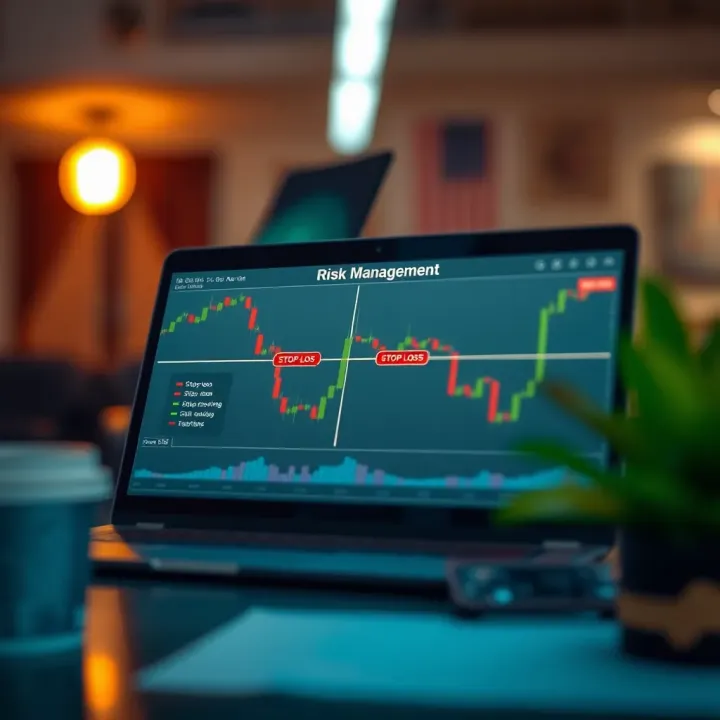
Forex trading strategies guide how traders enter and exit markets. Picking a strategy matches your trading style, risk appetite, and market conditions. These popular approaches strike a balance between simplicity and effectiveness, making them practical for Kenyan traders navigating daily market shifts.
Using moving averages helps traders spot the overall market direction. By smoothing out price data over a set period—say 50 or 200 days—moving averages reveal whether prices tend to rise or fall. For example, if the short-term 50-day moving average crosses above the long-term 200-day average, it might signal a buy opportunity. This method suits traders aiming to ride established trends rather than chasing quick profits.
Trendlines and channels complement moving averages by visually marking support and resistance areas along price trends. Drawing a line connecting higher lows in an uptrend, or lower highs in a downtrend, helps confirm the direction. Channels add parallel lines to define the upper and lower price boundaries. Tracking these can signal when a trend might weaken or reverse, guiding timely entries or exits.
Identifying support and resistance zones allows traders to operate in markets lacking clear trends. Support is the price level where buying interest prevents further declines, while resistance caps price advances. For instance, if EUR/USD repeatedly bounces near 1.1000 support but fails to break above 1.1200 resistance, traders might buy near support and sell near resistance. This helps capitalise on predictable price swings.
Oscillator indicators like RSI (Relative Strength Index) measure if an asset is overbought or oversold within a trading range. An RSI above 70 suggests overbought conditions—potentially signalling a reversal—while below 30 indicates oversold. Kenyan traders often use RSI alongside support/resistance to confirm timing for entries and exits in range-bound markets.
Spotting consolidation zones is key to breakout strategies. When price moves sideways within a narrow range after a strong move, it’s consolidating. Spotting such zones on charts, like a tight box pattern, can alert traders to upcoming volatility. For example, if USD/JPY trades between 110.50 and 111.00 for days, a breakout above or below signals a potential strong move.
Entry and exit signals during breakouts rely on volume increases and candlestick patterns confirming the move. Traders often wait for a candle close outside the consolidation zone to avoid false signals. Setting stops just inside the range protects capital if the breakout fails.
Short-term market moves focus on capturing small price changes within minutes or hours. Scalpers closely watch forex pairs like GBP/USD for quick profits using charts at 1-minute or 5-minute intervals. Kenyan traders active during London or New York sessions can find opportunities amid sudden price spikes caused by economic news.
High-frequency trades involve executing many trades daily, each yielding slight gains. This demands discipline, fast execution through reliable platforms, and strict risk limits. While challenging, it offers consistent chances to profit from Kenya’s growing access to online trading and robust internet infrastructure.
Choosing the right strategy depends on your goals and patience. Experiment in demo accounts before committing real funds. Understanding how each approach responds to various market conditions builds confidence and sharpens execution.
Risk management is a cornerstone of successful forex trading. It safeguards your capital and keeps you in the game, especially in a market as volatile as forex. Without proper risk controls, a single bad trade can wipe out weeks or even months of profits. For Kenyan traders operating with often limited capital, managing risk is not just advisable — it's necessary to survive and grow in the market.
Stop-loss and take-profit orders help you lock in gains and prevent large losses. A stop-loss automatically closes your trade if the price moves against you beyond a set point. For example, if you buy USD/KES at 110 with a stop-loss at 108, your position closes if the market drops to 108, capping potential loss.
Take-profit, on the other hand, locks in profits at a pre-agreed price. Suppose your target is 115; once the price hits this, the trade closes, ensuring you do not miss out if the market reverses. These tools protect your capital from emotional decisions and unexpected market swings.
How much you risk per trade matters a lot. Larger positions mean higher potential profits but also bigger losses. A common rule is to risk only 1–2% of your total trading capital on a single trade. So, if your account holds KSh 100,000, risking KSh 1,000–2,000 per trade helps you withstand a losing streak without wiping out your account.
Position sizing depends on your stop-loss distance and capital size. For example, if the stop-loss is 100 pips away, the lot size should adjust so that the maximum loss equals your risk limit. This requires simple calculations but prevents reckless exposure.
Emotions can cloud judgment in forex trading. Fear might cause you to exit trades prematurely, while greed pushes you to hold losing positions too long. Kenyan traders who rely on M-Pesa and their mobile phones for trading sometimes rush decisions during commutes or after a long day, which can increase emotional bias.
Being aware of your emotional state and sticking to pre-set plans helps reduce such mistakes. Techniques like keeping a trade journal can highlight psychological triggers, making you more objective over time.
Trading too much often arises from impatience or trying to recover previous losses quickly. This behaviour can erode profits through commissions and spread costs, and increase overall risk exposure.
It’s better to wait for high-probability setups rather than entering trades out of boredom or frustration. For instance, a Kenyan trader might resist the temptation to trade every USD/KES spike during market hours and focus only on clear signals.
Trading plans guide your actions — outlining when to enter, exit, and how much to risk based on clear rules. Discipline in following your plan reduces guesswork and emotional trading.
Kenyan traders who treat trading like a business rather than a gamble tend to develop and maintain detailed plans. This approach builds consistency and helps analyse performance objectively over time.
Without solid risk management, even the best forex strategies can fail. Protect your capital, control emotions, and trade with discipline to build lasting success.
Utilising PDF guides to learn forex trading strategies offers solid benefits, especially for Kenyan traders who want to deepen their knowledge at their own pace. PDFs provide a reliable way to revisit complex concepts without relying solely on internet access or streaming videos, which can be limited or costly. These documents often condense key ideas into clear segments, making them excellent tools for structured learning and repeated review.
One big plus for forex PDFs is offline availability. Once downloaded, you can study anywhere—be it during a matatu ride or while waiting at the clinic—without worrying about mobile data or network issues. This flexibility suits busy traders trying to balance learning with daily hustles, allowing consistent progress even when off-grid.
Forex PDFs often present material in a methodical sequence, starting from basics and gradually moving to advanced strategies. This organisation helps you absorb information step-by-step, avoiding the confusion that jumping between web pages or scattered notes can cause. For example, a guide might begin with identifying trends, move on to risk management, and then offer practice exercises.
Many PDF guides break down trading techniques in clear, actionable steps. Instead of abstract theory, you get practical instructions like setting stop-loss levels or applying moving averages, which you can follow directly on your trading platform. This hands-on approach boosts confidence and reduces trial-and-error mistakes.
Brokers registered with authorities like the Capital Markets Authority (CMA) often provide free strategy PDFs to educate clients. These resources tend to be trustworthy, updated, and tailored to the broker's platform, which helps new users practise without confusion. For instance, brokers like FXPesa or Exness Kenya offer free downloadable materials grounded in actual trading conditions.
Specialised sites dedicated to forex learning, such as BabyPips or DailyFX, host extensive PDF libraries. These platforms usually cover a wide range of techniques for all skill levels. Although global, many guides are easy to adapt locally since they focus on universal market principles and trading psychology.
Online forums, social media groups, and WhatsApp communities centred on Kenyan forex trading can be a goldmine for shared PDFs and insider tips. Members often exchange guides they found useful or created themselves. While this route requires caution to avoid unreliable sources, peer reviews help identify trustworthy materials.
Look for PDF guides that embed real trading examples or case studies. These show how strategies perform under different market scenarios. For example, a guide might include screenshots of trades using the USD/KES pair during volatility, demonstrating entry and exit points clearly.
Complement PDF learning with demo trading accounts provided by brokers. Applying concepts from the guides in a risk-free environment solidifies understanding. A Kenyan trader can open a practice account on platforms like HotForex or XM and test strategies learned from PDFs without using real money.
Forex markets evolve, so it’s wise to revisit PDF guides periodically and check for newer versions. Staying updated prevents outdated methods and ensures your approach remains effective in changing conditions. Many brokers and platforms notify users of refreshed materials, so consider subscribing to newsletters or alerts.
Consistent study and practice using well-chosen PDFs can turn theoretical forex strategies into actionable trading skills, especially when combined with local market awareness and disciplined risk management.
💱 Learn forex trading basics, broker tips, regulation, and fund management tailored for Kenyan traders. Navigate currency markets confidently and safely with practical insights.

Explore Deriv forex trading 🇰🇪 with this detailed guide: platform features, forex instruments, strategies, and smart risk management tips for Kenyan traders.

Discover the best forex courses in Kenya to boost your trading skills 📈. Learn essential techniques, course costs, and how to pick the right one for you.
📈 Master derivative trading with our practical guide! Understand strategies, risk management, and access handy PDFs to sharpen skills in Kenya and beyond.
Based on 10 reviews